Snapping Turtle
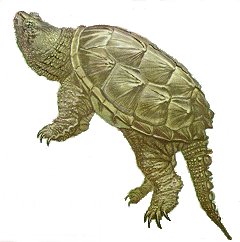
Chelydra serpentina
Size: to 15" (body)
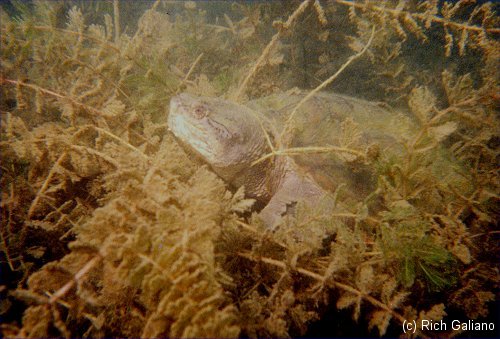
Habitat: hides on the bottom in any type of water
Notes: Generally docile and easily approached in the water, but should be treated with respect for its powerful bite. This turtle can easily amputate a finger or toe and becomes pugnacious when landed. If you have the patience, try to see how long this turtle can go between breaths. A lot longer than you or me, that's for sure.
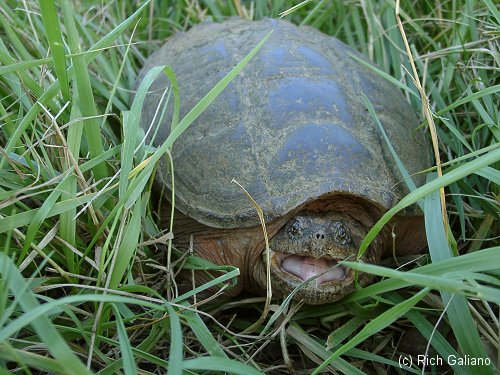
On land is a different story. I pulled over and used a stick to push this nasty little guy off the highway. He was not the least bit appreciative, and snapped at me repeatedly - the long neck gives this turtle a very quick snake-like motion. Spring seems to be the season for Snapping Turtle wanderlust, and they turn up in the darndest places.