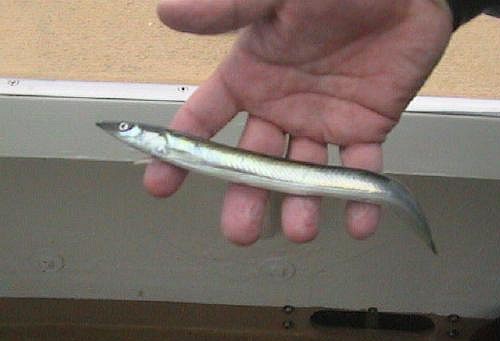
Sand Lance

Ammodytes americanus
Size: to 8"
Habitat: inshore waters, from surface to bottom
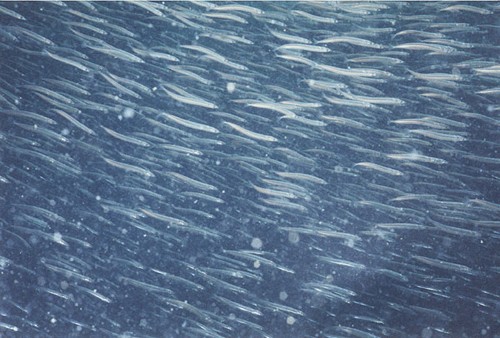
Notes: The Sand Lance is an important link in the marine food chain. It is a major part of the diet of many commercially important fishes, as well as whales and seals. Sand Lances form huge schools to feed on phytoplankton and have the ability to dive into the bottom sediments to escape predators. I have never seen a live one, but they are common in the bellies of other fishes that you may catch.