
China Wreck
- Type:
- shipwreck, sailing ship
- Specs:
- ( 158 ft )
- Depth:
- 45 ft
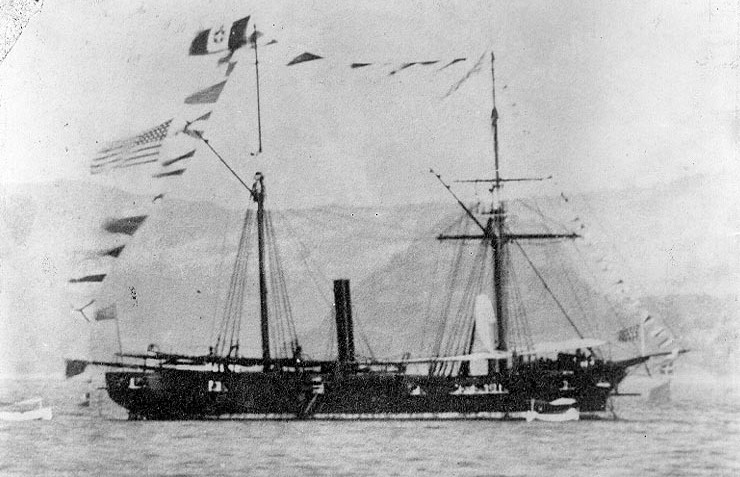
The "China Wreck" is the partial remains of a late 19th-century wooden sailing ship, with a cargo of china plates and cups, and miscellaneous articles. This site is believed to be the wreck of the D.H. Bills, a 158'-long wooden-hulled barkentine topsail schooner that sank with a cargo of British-made earthenware during a storm in March 1880.
D.H. Bills was originally built in 1861 in Boston for the US Navy as the Unadilla class gunboat USS Huron, and served throughout the Civil War. The class was designed to be fully ocean-going, but small enough to operate inshore. Dual engines and propellers would have made them very handy. In 1869 her machinery was removed and she was sold.
The wreck must be dived at slack tide, and even then conditions at the mouth of Delaware Bay tend to be muddy. The plates themselves date from about 1875, and are fairly ordinary and of little value except to divers who prize such artifacts; and despite years of plunder, there are still more to be found.
Questions or Inquiries?
Just want to say Hello? Sign the .