Comb Jellies
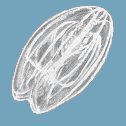
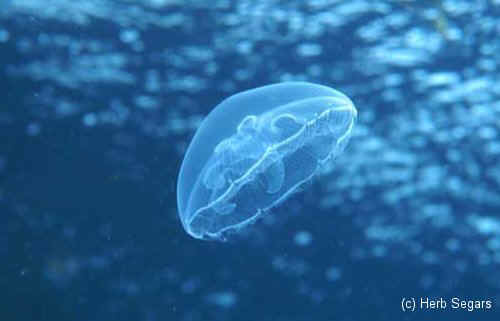
You cannot go diving in New Jersey waters without seeing Comb Jellies. Up close, rainbow-like rows of tiny beating hairs called cilia may be seen - the Comb Jelly's only means of propulsion. Comb jellies do not sting, but they are still voracious predators, feeding on anything they can engulf. At night they may phosphoresce - watch the boat wake as agitated Comb Jellies flash in the dark like depth charges. Cnidarians are exclusively marine, although some are tolerant of brackish water as well.

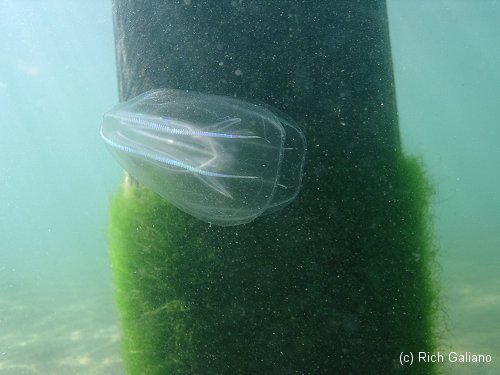
About two inches wide, Leidy's Comb Jellies range from Cape Cod to the Carolinas and are common in the Chesapeake Bay as far north as Baltimore. They have eight moving comb plates that move food toward the mouth. Marine labs use them to study bioluminescence and regeneration. Comb jellies are not true jellyfish - they have no stinging cells, although they are predatory, and have even been known to take small fishes!
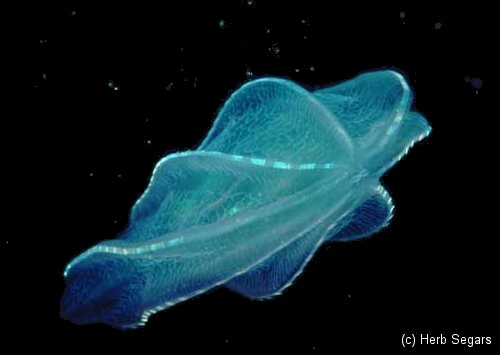
Comb Jellies are classed in a phylum of their own - Ctenophora. ( Pronounced 'tee-no-for-a', the C is silent. ) It has about 100 species in 5 orders. Comb Jellies live in all oceans, not caring whether it is hot or cold. Reproduction is sexual. The young resemble their parents and they can breed as soon as they hatch at just 1mm in length!

The Sea Gooseberry is another ctenophore like the Comb Jelly. Although they have tentacles, these creatures do not have stinging cells; instead, the tentacles use a sticky coating to trap plankton.

The many creatures on this page are lumped together for the one trait they all have in common - they are all "jelly-like" - soft, gelatinous, and more-or-less transparent. Other than that, they are for the most part completely unrelated. True Jellyfishes, Hydromedusae, and Siphonophores are in the phylum Cnidaria, related to bottom-dwelling Hydroids, Sea Anemones, and corals. Comb Jellies are in the phylum Ctenophora, and are completely unrelated to jellyfishes, as are Sea Butterflies and Corollas, which are mollusks. Salps are free-swimming tunicates, more closely related to us than to any of these other creatures.
More: Jellyfishes ...