Red Hake (Ling) & Silver Hake (Whiting)
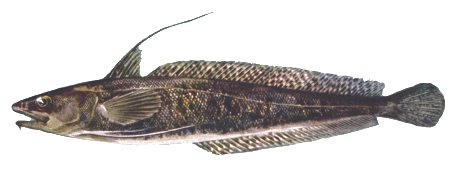
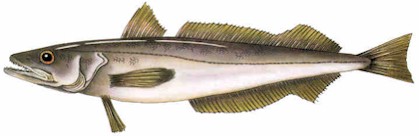
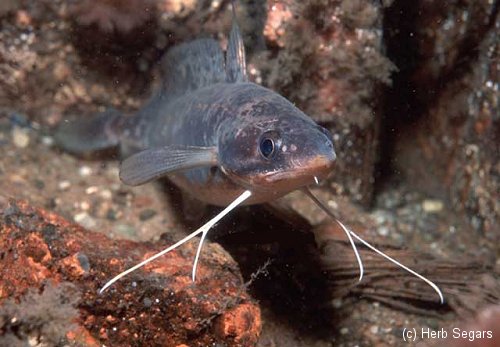
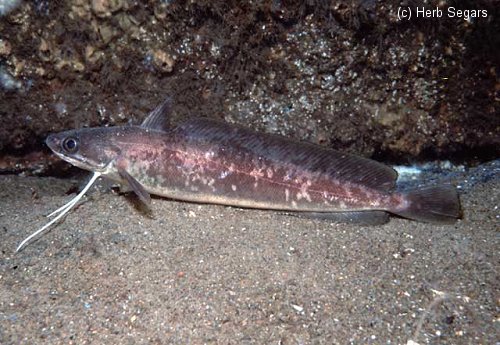
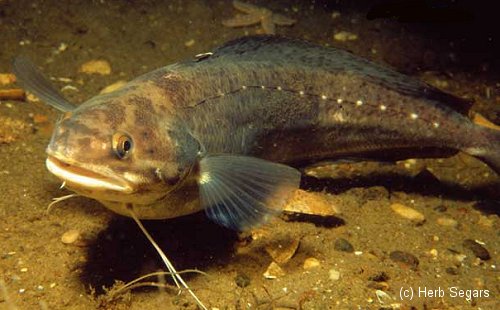
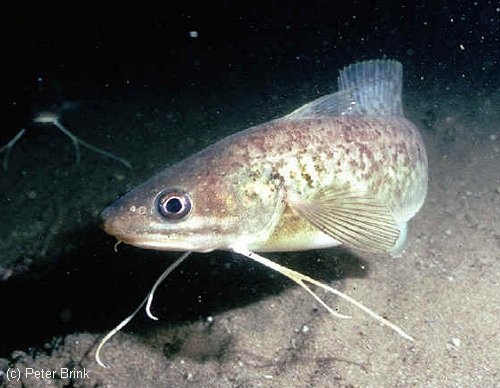
Our two commonest "Hakes" differ from cods above in having the three dorsal and two anal fins merged into two and one, respectively. The Red Hake or Ling Urophycis chuss is easily identified by its pelvic fins, which are formed into long white split streamers. It grows to 20" and 6 lbs. Ling are very common on just about all dive sites.
White Hake is similar to Silver Hake, but larger, growing exceptionally to 50 lbs. Spotted Hake is also very similar to Red Hake, but with pronounced spots along the lateral line. The Silver Hake or Whiting Merluccius bilinearis is somewhat smaller and less common, growing to 15". It lacks the dorsal and pelvic streamers of the other hakes.
All of these fishes have rather soft and easily bruised flesh but are good eating. If cleaned promptly and properly the meat is white, sweet, and flaky. However, the odorous slime and feces they put out when caught will leave a stench on anything that touches it.

Cods - family Gadidae - are one of the most commercially important families of fish in the sea. As such, they have been fished to the brink of disaster. The book above is a fascinating study of the historical relationship between western civilization and the codfish.
The only freshwater representative of the cod family is the Burbot.
More: Cods & Allies ...