
Dive Flag
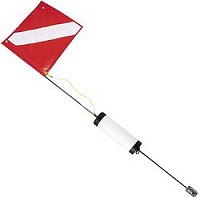
All divers are required to show a flag when in the water. When boat diving, the boat will fly the flag for you, but when shore diving you must take care of this yourself. All dive shops sell flag/floats and lines. The simple fiberglass pole type is inexpensive and works fine; there is no need to buy anything extravagant - it will only get beat-up. If you plan to stay in one place, you can tether the flag to an extra weight on the bottom, or even just prop it up at the shore. If you plan to move around, then you should drag it behind you.
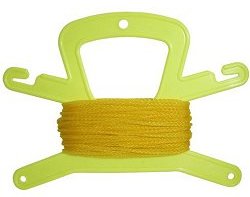
Use only polypropylene for a flag line, never nylon. Polypropylene floats, so when it goes slack it will float up away from you, instead of sinking down in coils around you, like nylon. The big yellow spools that dive shops sell work very well. Although they look clumsy, their size makes them easier to handle in the water. With experience, you will learn to gauge the amount of line necessary to keep the flag from being pulled under, without letting out a huge excess to get tangled up in. Add a brass snap to clip it off for hands-free use. Once you get used to it, dragging a flag is really no trouble at all.
Because of the risk of entanglement, always carry a knife when dragging your own flag.