Strobe Light
Day or night, an inexpensive flashing strobe light hanging from the anchor chain will guide you home. At night, it may be the only thing that leads you back to the up-line, and even during the day, it is reassuring to look up and see it blinking in the distance. Under some conditions, it can relieve you of the need to use a wreck reel, something that any spearfisherman would appreciate.
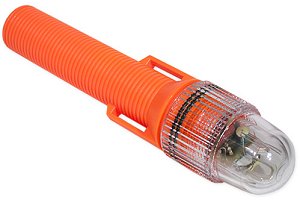
In fact, the more strobe lights there are hanging from the anchor line, the better. The presence of your strobe light signals to other divers that you are still down. Don't get one of the miniature AA-powered models, get a big bright one that you can see from a distance through murky water. The tektite Strobe 300 (pictured) is the biggest and brightest model available, and probably the best for use in our murky waters.
Strobe lights wear out. Depending on use, a strobe may last several years, but over time it will flash slower and slower until eventually, it is too slow to be useful. Battery condition has nothing to do with this - it is the capacitor dying. If you buy a Tektite strobe, the company has an excellent policy on repair and refurbishment. For around $20, they will replace the sealed electronics unit and any other worn parts and return the unit to you, usually in a week to ten days.