
Emergency Spares Kit
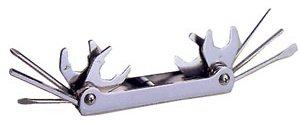
You should always bring along spare parts and some basic tools on every diving excursion. Dive shops all sell Save-a-Dive kits that are a good start on this. Here is a list of some things you might want to carry in your spares kit:
- o-rings for your tank valves and regs, and anything else that uses them
- wire ties, large and small, lots of 'em
- spare straps & buckles for mask, fins, snorkel, and knife
- spare regulator mouthpiece & wire tie
- a few feet of wreck reel line and surgical tubing
- duct tape ( squeeze a small roll flat to save space )
- silicone grease or O2 lube
- extra batteries and bulbs for all your lights, computers, and camera
- spare lanyards and brass snaps
- stainless steel dive tool with wrenches, allens, and screw drivers ( pictured above )
- stainless steel folding multi-tool with pliers, blades, and wire cutter
- glues and sealants - neoprene cement, AquaSeal, Crazy Glue
- bicycle tire patch kit - for small suit repairs
- soap, powder and wax for drysuit if necessary
- extra cam band - plastic buckles can break, especially in the cold
- extra car keys, cash, spare change, C-card, etc
Many of these items are available at the hardware store considerably cheaper than at the dive shop. All will fit neatly into a Tupperware shoebox, or a Pelikan dry box if you like to spend money. Just make sure you use something waterproof.
In the pharmaceutical department, I would also carry:
- Dramamine, if it works for you
- Aspirin or Tylenol, for those early-morning cold-water headaches
- sleep-aids for overnight trips, if you need them
- Sudafed
I'm sure I'm going to get some flack over that last one. Yes, I know you're not supposed to take decongestants, but I make one exception for Sudafed. It is long-acting and subtle, with no noticeable side effects or rebound ( for me, anyway. ) Take a couple 15-30 minutes before the dive, and you will find you have much less difficulty clearing on the way down, especially in cold water and especially on repeat descents. Sudafed is the only decongestant I would ever use for diving, and only when in good health already - if you are not, DON'T DIVE.
Remember, spare parts and tools are of no use if they are sitting at home while you are having a problem on a dive. And even if you never need these things yourself, it is always a good feeling when you can help out someone who is less prepared than you. A spare mask is also a good item to carry; if a mask skirt tears there is no way to repair it, not even good old duct tape.