Windowpane
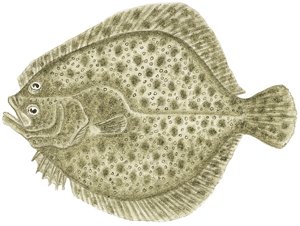
Scophthalmus aquosus
Size:
to 18"
usually much smaller
Habitat:
Soft sandy bottoms,
in depths from water's edge to 150 ft.
Description:
This is a left-eyed flounder. Identifying characteristics are the nearly circular body shape and the free rays of the dorsal fin, which form a frill near the eye. The Windowpane is common but very thin and too small to eat. It is the sole new-world representative of the turbot family, which is commercially important in Europe.
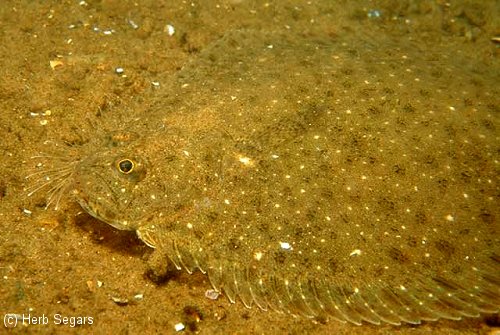
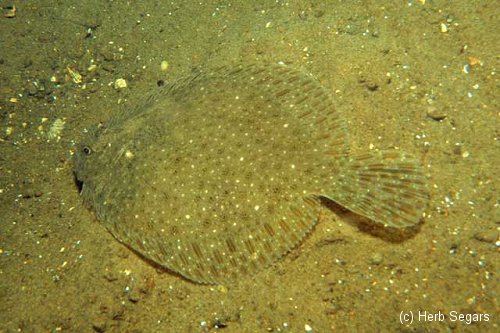
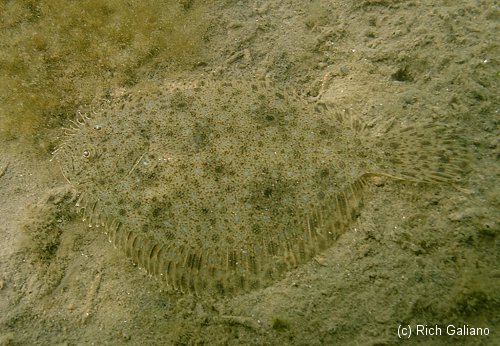

These fish all live and feed on the bottom, out in the open. Often they will hide in the sand with just their eyes visible, and most can change color to match their surroundings.
More: Flounders ...