
Shellfish
This page lumps together representatives from crustaceans and mollusks. Freshwater typically has lower diversity than the ocean. However, this is just a tiny sample of what may be found.
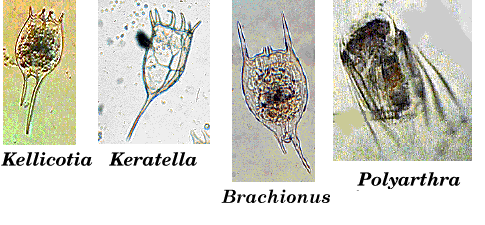
Freshwater also contains an entire phylum of microscopic creatures known as rotifers. Rotifers are exclusively freshwater predators which swim by means of cilia. Their relationship with other animals is not clear.
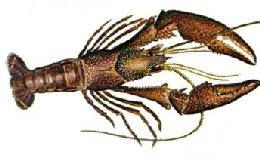
Cambarus bartoni
Size: to 3"
Habitat: small streams, sometimes ponds and lakes
Notes: Active at night, hides in burrows or under objects during the day.
More: Eastern Crayfish ...
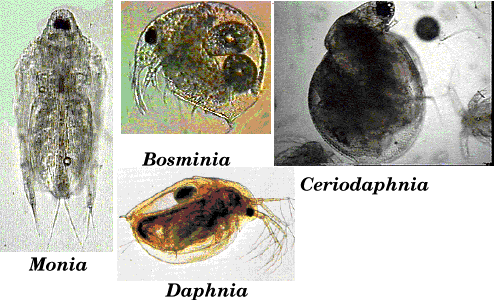
More: Miscellaneous Crustaceans ...
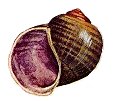
Pomacea paludosa
Size: to 2"
Habitat: quiet waters
Notes: The largest freshwater snail in the area.
More: Apple Snail ...
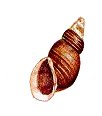
Goniobasis virginica
Size: to 1"
Habitat: flowing water
Notes: This is one example of the many small snails you may find during a freshwater dive. They are very common in Round Valley Reservoir, which is filled from the Raritan River.
More: River Snail ...
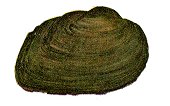
Elliptio crassidens
Size: to 6"
Habitat: dug into muddy or sandy bottoms in quiet waters
Notes: Looks like a clam, but it's actually a mussel.
More: Pearly Mussel ...
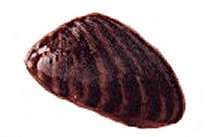
Dreissena polymorpha
Size: to 2"
Habitat: grows profusely on any solid surface
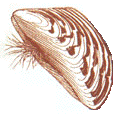
Notes: Zebra Mussels were introduced into the Great Lakes in the mid-eighties from the Caspian Sea region of Eurasia. They probably arrived as larvae in the ballast water of visiting ships. Since then, they have been having a regular party - spreading like wildfire and often covering every available hard surface, including each other. This wreaks havoc with power-plant cooling systems and municipal water supplies, where masses of the tiny bivalves clog pipes and water intakes. The mussels also radically alter the native lake ecology by efficiently filtering nutrients from the water. This does have one positive effect for divers, however. Apparently, the Great Lakes and surrounding waters have never been cleaner or clearer.
More: Zebra Mussel ...