Amphipods
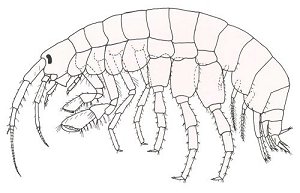
Amphipod crustaceans typically range in size from 2 to 50 mm, although a few may be larger. Amphipods are common in aquatic ecosystems throughout many parts of the world, inhabiting marine, brackish, and freshwater environments. A few species are also terrestrial. Amphipod means "different foot", a reference to the varied legs that are evident in the illustrations, as opposed to isopods.
The order Amphipoda, which contains nearly 7,000 described species, is divided into three suborders: Gammaridea, Caprellidea, and Hyperiidea. Gammaridea, with more than 5500 described species, is not only the largest amphipod suborder but also contains all of the freshwater and subterranean taxa. Approximately 21 superfamily groups, 95 families and more than 1000 genera are recognized within this suborder.
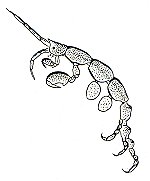
The Gammarus or Scud ( above, to 1.2" ) is just one example of the many types of tiny amphipod crustaceans that inhabit our waters. At times, clouds of these will reduce visibility to near zero. At night they are attracted to bright lights and may surround you in a swarm. Some bite.
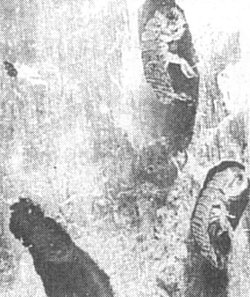
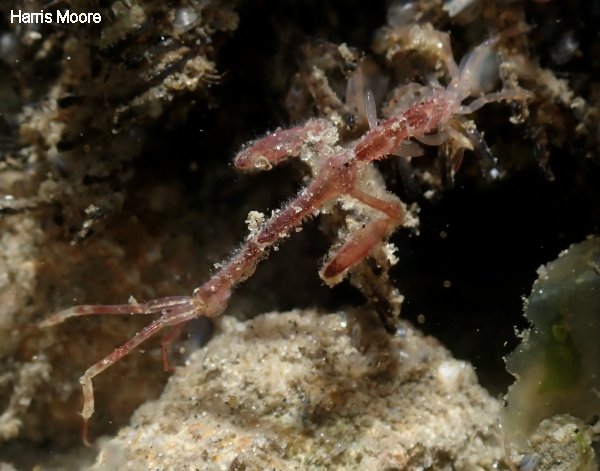
Skeleton Shrimps ( right ) are bizarre but extremely common amphipods. They are like sea-going Praying Mantises, clinging to buoys, pilings, drifting flotsam, and anything else that is solid with the last three pairs of legs, and snatching food items with the pincer-like forelegs. You may even find them clinging to your suit when you exit the water. Usually 1/2 " to 3/4 " long.
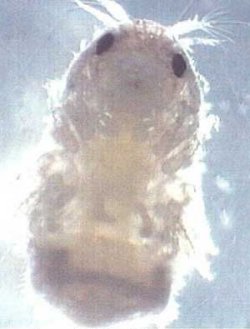
Gribbles Limnoria Iignprum (below) are tiny wood-boring amphipods. They don't actually feed on the wood, but on the fungus and micro-organisms that grow on the wood surface that they create as they tunnel. Gribbles hollow-out wooden structures at the tide line.