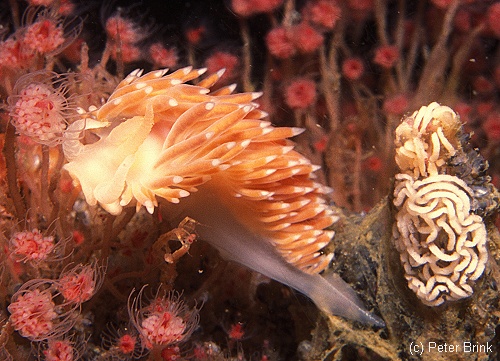
Nudibranchs
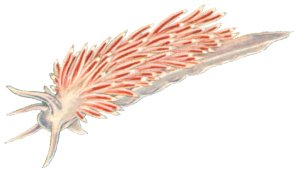
Idulia spp, Coryphella spp, others
Size: 1/2 " to 4"
Nudibranchs or Sea Slugs are not worms but shell-less gastropod mollusks, related to garden slugs. Their closest relatives here are planktonic Sea Butterflies. Some types of nudibranchs, including those shown here, assimilate the functioning stinging cells of their food, and should not be handled for this reason.
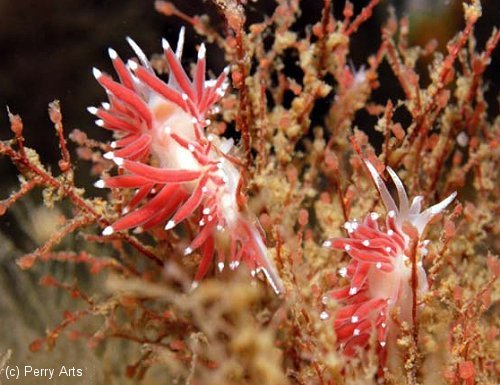
Red-Gilled nudibranchs feeding on hydroids, with which they are often found. They grow to 2 inches.
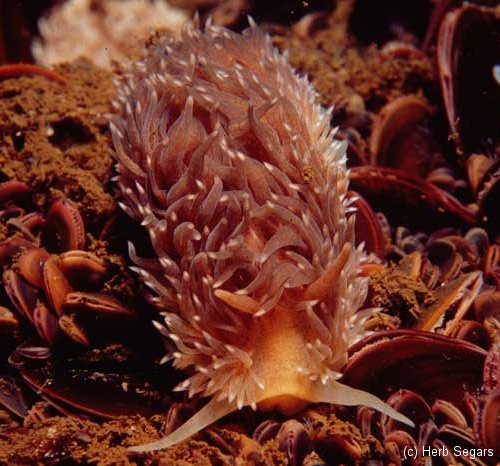
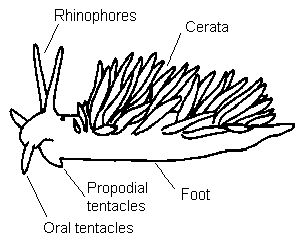
The Maned Nudibranch feeds chiefly on sea anemones, with a preference for the Frilled Anemone. The animal tends to take on the color of the anemones on which it preys. The Maned Nudibranch is 4" long, 1-1/2" wide, thick, and stubby. Its coloration is whitish, gray, or tawny-brown, with pale speckles. The nudibranch's back is covered with hundreds of slender, finger-like projections with a bare area down the midline. It has 2 pairs of antennae on a squarish head and its rear end is tapered to a blunt point.