Skates & Rays
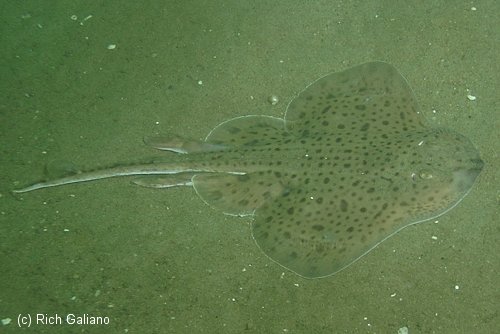
Skates and rays are related to sharks. Unlike flounders, these fish are flattened and lie on their bellies. Skates are harmless. Stingrays have one or more dangerous barbed stingers in the tail and will use them if molested. Finally, the Torpedo is an electric fish and can generate enough voltage to be dangerous. Some skates give birth to live young, while others lay their eggs encased in a horned Mermaid's Purse.
Before you go messing with any of the fishes on this page, learn the differences. Some of them can make you very sorry.
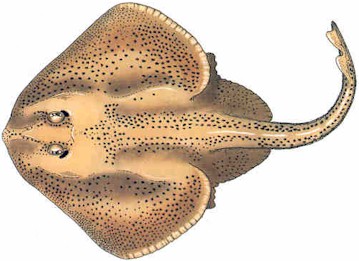
Raja erinacea
Size: to 21" long
Habitat: Soft sandy bottoms, in depths from shallows to 300 ft.
Notes:
The commonest inshore skate. Short tail with two fins but no stinger. Winter Skate similar but larger, to 3 ft.
More: Little Skate ...
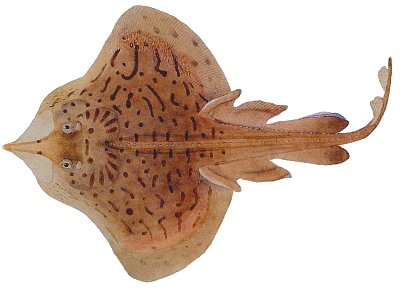
Raja eglanteria
Size: to 31" long
Habitat: Soft sandy bottoms, in depths from shallows to 300 ft.
Notes:
The Clearnose Skate has a noticeably pointy nose compared to the Little Skate, with a semi-transparent patch on either side of the snout.
More: Clearnose Skate ...
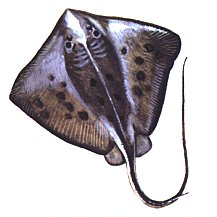
Dasyatis sayi
Size: to 3 ft across
Habitat: Soft sandy bottoms, depths from shallows to 1400 ft.
Notes:
Potentially dangerous
The commonest inshore ray. Long smooth whip-like tail with stinger but no fins. Roughtail Stingray similar but larger. Smaller Atlantic Stingray and larger Southern Stingray may occasionally stray this far north as well.
More: Bluntnose Stingray ...
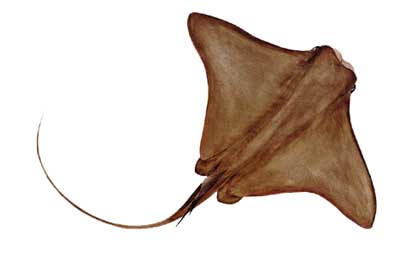
Rhinoptera bonasus
Size: to 3 ft across
Habitat: Coastal
Notes:
Unlike the other fishes on this page, this is a free-swimming ray, often found near shore in large schools. They generally arrive en masse late in the season and are otherwise uncommon.
More: Cownose Stingray ...
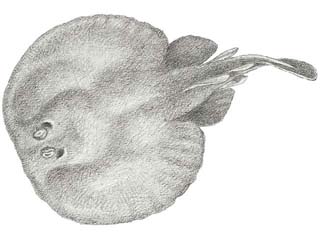
Torpedo nobiliana
Size: to 6 ft long, 200 lbs., and 220 volts
Habitat: Soft sandy bottoms, from water's edge to 350 ft. Uncommon.
Notes:
Potentially dangerous
Distinguishing characteristics: Round body with a short tail and no stingers. This fish can produce enough electricity to stun a swimmer, but it is usually unaggressive. They are uncommon but deserve mention for the surprise they pack. I have seen unaware divers ( including a PADI "Underwater Naturalist" instructor ) get zapped in the tropics by the smaller ( 40 volts ) electric rays there.
More: Atlantic Torpedo ...
- Sea Basses & Porgies ...
- Blackfish & Cunner ...
- Cods & Allies ...
- Triggers, Puffers, & Sunfish ...
- Flounders ...
- Drums ...
- Ocean Bottom ...
- Baitfishes ...
- River & Inlet ...
- Pelagics ...
- Tropical Fishes ...
- Sharks - Inshore ...
- Sharks - Offshore ...
- Sharks - Dogfishes ...
- Skates & Rays ...
More: Marine Fishes ...
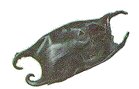
The Mermaid's Purse is not an invertebrate at all - it is a fish egg capsule. The egg capsule of a skate or ray, to be precise. The "horns" are to secure the capsule in seaweed. You may find one with a baby skate growing inside, but most are empty. They are included here with bivalves because they are often found scattered around the bottom like shells, up to 3" long. They certainly don't look like fish!
More: Mermaid's Purse ...
Fish
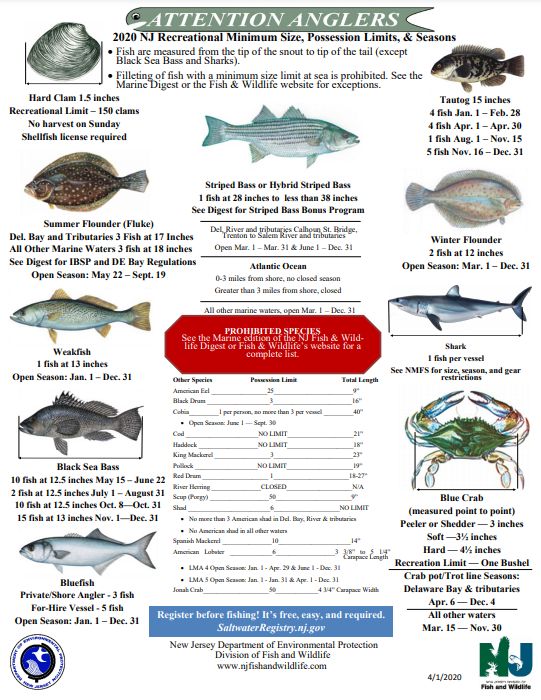
New Jersey now requires registration for saltwater fishing, including lobsters. Registration is free and can be done online at nj.gov/dep/saltwaterregistry.
This listing is for New Jersey waters only - if you cross into New York or Delaware, or Federal waters ( more than 3 miles offshore, ) you are subject to their regulations. Federal regulations supersede state regulations whenever stricter.
Lobster
More: Fishing Regulations ...