
Shrimps
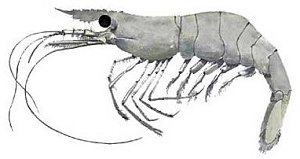
Shrimps live in all habitats from freshwater lakes to salt marshes to the deep ocean. The illustration at right shows a "Grass Shrimp, " however, there are too many types of shrimps to even begin to list them. Shrimps grow from 1" to 8", depending on the species.
Most numerous in our inshore waters are tiny Shore Shrimps or Grass Shrimps, Palaemonetes spp. which are similar to the picture, but only 2" long, and transparent or largely so.


Shore Shrimps are extremely common. Small individuals may be completely transparent, while larger ones may be camouflaged or striped. They are generally found clinging to pilings and rocks, or in eelgrass and seaweed, or other structure.


Sand Shrimps occur in small numbers among the much more common Shore Shrimps, from which they are easily differentiated by their blunt heads. They also have much more flattened bodies and move differently. Sand Shrimps grow to 2 3/4 "; large specimens are eaten in Europe as prawns.
All of these small shrimps feed mainly on algae.

Mantis Shrimps (right) are not true shrimps. These 10" predators have powerful pinching forelegs which can lacerate a finger. They have flattened bodies and 8 pairs of legs altogether, but most are small and weak. Mantis Shrimps are secretive burrowers in mud bottoms from coastal shallows to the deep. They are seldom seen but are reportedly good eating.
A Striped Bass I cleaned once proved to have a belly full of finger-sized mantis shrimps - the only time I have ever seen them around here.