Slipper Shells
Crepidula fornicata
Size: to 0.8 - 2 "
Habitat: attached to solid surfaces, often other larger shells
Notes:
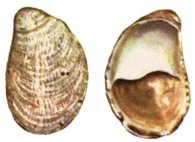
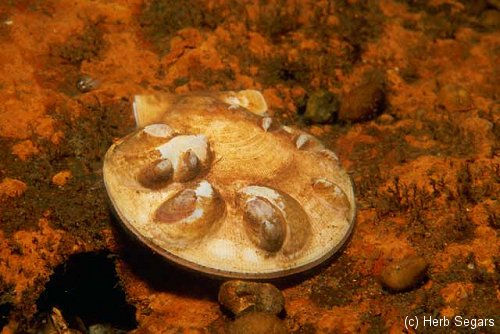
Although the dead empty shells superficially resemble bivalves, Slipper Shells are actually extremely flattened snails. The living animal has only a single uncoiled shell, and lives under it attached to a hard surface. A small shelf inside gives these odd animals their name. The illustration shows the shell from above on the left and from below on the right. Slipper shells are quite commonly attached to the undersides of Sea Scallops, often in stacks. Filter feeders.

These creatures are all of the order Gastropoda - having a single, often coiled, shell, as opposed to the bivalves, which have two matching shells. Most snails are hermaphroditic. Also, most snails have a right-hand twist to the shell, although there are exceptions.
Right:
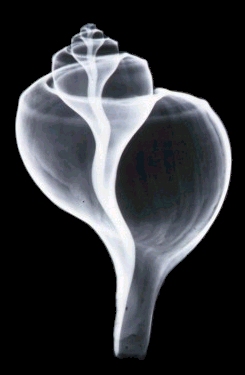
X-ray image of a Channeled Whelk, showing internal structure.
Nudibranchs are a form of snail that has lost its shell, while Corollas and Sea Butterflies are snails that have abandoned not just their shells, but the snail-like existence entirely, swimming up into the water column as plankton.
More: Snails ...