
Channeled Whelk
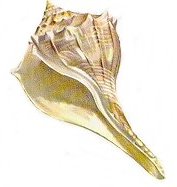
Busycon canaliculatum
Size: to 8"
Habitat: intertidal down to 60 ft
Notes:
Whelks are the largest snails in this area. Related Lightning Whelk grows to 16", and is sometimes called Conch and eaten as such. Whelks prey on bivalves by drilling through their shells.
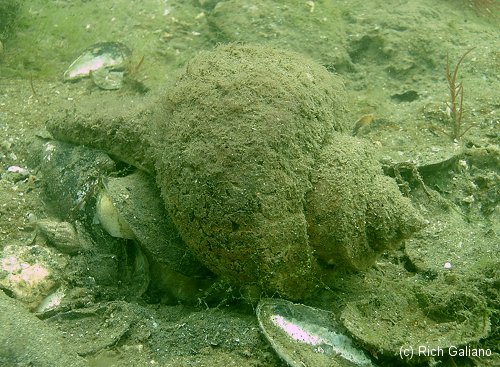
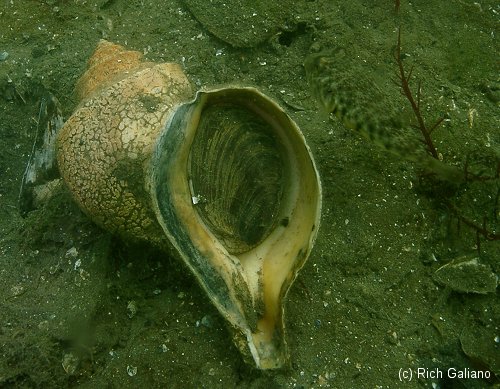
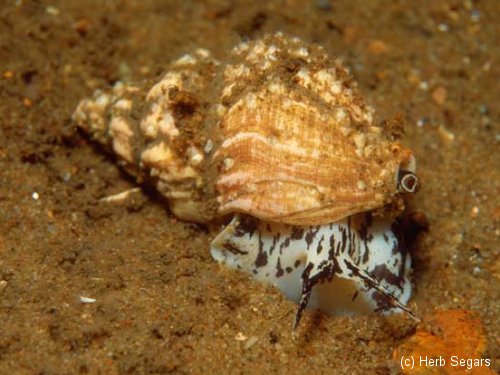
These creatures are all of the order Gastropoda - having a single, often coiled, shell, as opposed to the bivalves, which have two matching shells. Most snails are hermaphroditic. Also, most snails have a right-hand twist to the shell, although there are exceptions.
Right:
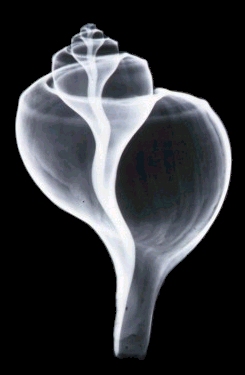
X-ray image of a Channeled Whelk, showing internal structure.
Nudibranchs are a form of snail that has lost its shell, while Corollas and Sea Butterflies are snails that have abandoned not just their shells, but the snail-like existence entirely, swimming up into the water column as plankton.
More: Snails ...