American Lobster (5/6)

Lobster Molting

Lobster Molting

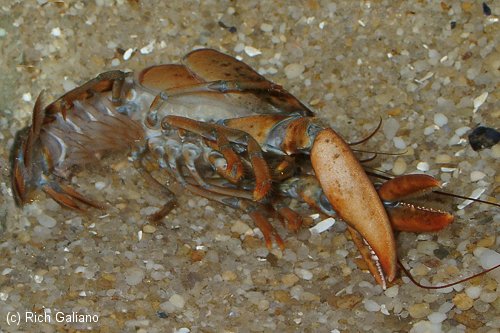
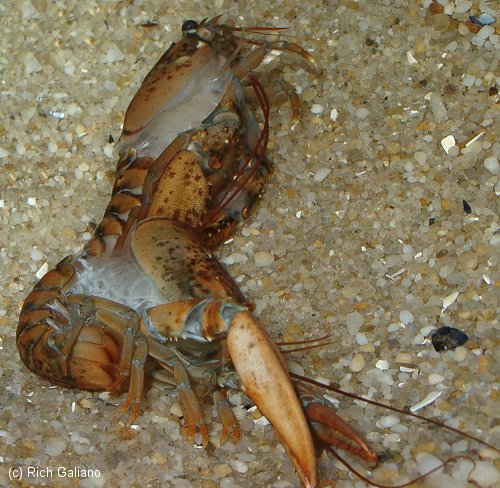
The shell has just split between the tail and the body. The old shell is lifting off, revealing the new one beneath. By now the animal has withdrawn much of the calcium from the old shell and stored it in its blood and tissues. This weakens the old shell in preparation for molting while allowing the lobster to reclaim precious materials for its new shell.
Lobster Molting

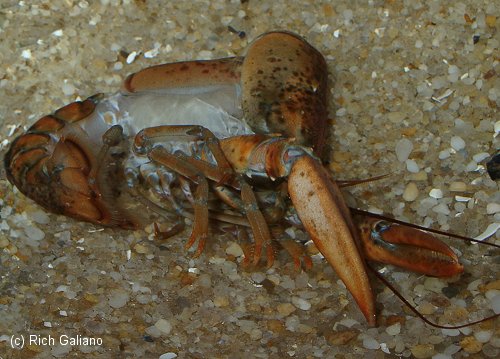
Although it's not readily apparent, the legs and claws are now pulling out of their casings in the old shell. The tail is still firmly inside and is the last part to be withdrawn.

The lobster is completely defenseless at this point and doesn't seem to be making much progress.
Lobster Molting

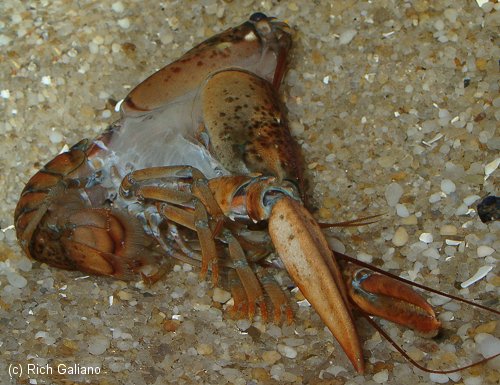
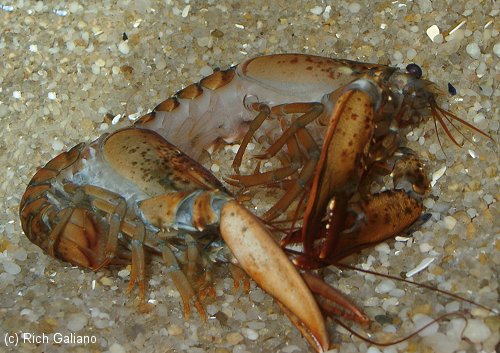
Finally, the eyes appear, and the head emerges. The antennae are folded down and still tucked inside their old casings. The legs and claws are all still trapped and hidden from view beneath the old shell. The tail is beginning to break free.

Things are moving much faster now. The entire sequence here covered about 15 minutes.
Lobster Molting

Most of the tail is now free, as are the legs. The claws begin to emerge, still trapped under the old shell. The antennae are also almost free, folded down between the legs.

In our waters, lobsters typically molt twice a year; in colder waters north of here, just once.

This is the most hazardous time in a lobster's life, and it would not normally molt out in the open where it could be attacked. I watched over this one after exposing it until it could make its own way again.
Lobster Molting

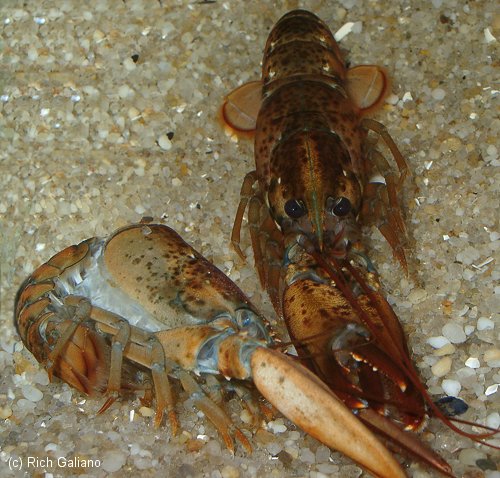
A flick of the tail now, and the lobster will be free of its old shell. The new shell is soft, leathery, and flexible.

For several minutes the lobster is completely helpless - its legs are so soft and rubbery that it cannot even stand up. The claws are creased and folded.
Lobster Molting

Initially, the "new" lobster is not noticeably bigger than the "old" one. In the next 15-20 minutes the animal will absorb enough water to inflate the new shell until it is about 30% bigger than the old one, and then re-deposit the stored calcium to harden it. This stiffens the shell and legs to where they are functional again, so that the lobster can walk, swim, and dig, although it will still be soft and vulnerable for several days.

All pictures taken off the coast of New Jersey

 1  4 5 6  

Mud Hole

  1. Barge #10
  2. 120 Wreck
  3. 3 Sisters
  4. 3/4 Tug
  5. 59-Pounder
  6. Ambrose Buoy
  7. A Street - Shark River
  8. Acara
  9. Across
  10. Adele
  11. Ajace
  12. Alex Mac
  13. Allenhurst Jetty
  14. Anastasia
  15. Antioch
  16. Arnoff
  17. Arundo
  18. Asfalto
  19. Aurora
  20. Ayuruoca
  21. BA Wreck
  22. Shark River - Back Bay
  23. Balaena
  24. Bald Eagle
  25. BD1738
  26. USS Benson
  27. Beth Dee Bob
  28. Blue Boy
  29. Bonanza
  30. Bronx Queen
  31. Brunette
  32. Bug Light
  33. Burnside
  34. Charles Dunlap
  35. Cecilia M Dunlap
  36. Cornelius Grinnell
  37. Catherine Jackson
  38. Chauncy Jerome
  39. Cornelia Soule
  40. Cadet
  41. Capt Smitty
  42. Catamount
  43. Charlemagne Tower
  44. Choapa
  45. clam boat
  46. coal (Lido)
  47. Continent
  48. crane barge
  49. Creole
  50. Daghestan
  51. Delaware
  52. Dragger
  53. drydock
  54. Dryland
  55. Edwin Duke / Stone Barge
  56. dump
  57. Duncan
  58. Edmund Phinney
  59. East Rockaway Inlet
  60. Ed's Schooner
  61. Elberon Rocks
  62. Emerald / USS Hibiscus
  63. Eureka
  64. Francis A Perkins
  65. FF Clain
  66. Finance
  67. Fort Victoria
  68. Gassoon
  69. German
  70. Lady Gertrude
  71. GL78
  72. Glen II
  73. Glory Wreck
  74. I.P. Goulandris
  75. Granite Wreck
  76. Gulftrade (stern)
  77. Gypsy
  78. Horseshoe Cove
  79. Alexander Hamilton
  80. Hankins (Big)
  81. Hankins (Offshore)
  82. Hankins 3
  83. Happy Days
  84. Cornelius Hargraves
  85. Harvey's Schooner
  86. Howard
  87. Iberia
  88. Ida K
  89. Immaculata
  90. Inshore Schooner
  91. Irene/Truro
  92. Irma C
  93. John Minturn
  94. Jack I
  95. Joan La Rie III
  96. Jones Inlet
  97. Jones Tug
  98. Kenosha
  99. Klondike Rocks
  100. Lizzie H. Brayton
  101. Lana Carol
  102. Larsen
  103. Lavallette Wreck
  104. Leon Walter
  105. Lillian
  106. Lizzie D
  107. Long Branch locomotives
  108. Logwood
  109. H.W. Long
  110. Macedonia
  111. Mahogany
  112. Malta
  113. Manasquan Inlet
  114. Margaret
  115. Marion
  116. Maurice Tracy
  117. Meta
  118. Middle Barge
  119. Mistletoe
  120. R.C. Mohawk
  121. Mohawk
  122. Manasquan Wreck
  123. Nautilus
  124. Navesink River
  125. Northeast Sailor
  126. New Reef
  127. New Deal
  128. New Era
  129. Old Yankee
  130. Olsen
  131. HMS Pentland Firth
  132. Park City
  133. Long Branch Pier Rubble
  134. Pinta
  135. Pipe Barge
  136. Pliny
  137. Plymouth
  138. Pocopson
  139. Princess Anne
  140. Ruth Shaw
  141. Robert A Snow
  142. Ramos
  143. Ranger
  144. Relief Lightship
  145. Rickseckers
  146. Ridge Schooner
  147. Riggy
  148. Rjukan
  149. Rockaway Inlet
  150. Rockaway Belle
  151. Roda
  152. Roy's barge
  153. Manasquan River Railroad Bridge
  154. Rudder Wreck - Pocono
  155. Rump
  156. Rusland / Adonis
  157. Scotland Buoy
  158. Sandy Hook Pilot Boat
  159. SC-209
  160. SC-60
  161. Sea Girt Inlet
  162. Sea Girt Wreck
  163. Sea Hag
  164. Seaside Crane Barge
  165. Shark River Inlet
  166. Shrewsbury Rocks
  167. Spring Lake Sailor
  168. Steel Wreck
  169. Stolt Dagali
  170. Southwest Mohawk
  171. Sylvanus
  172. Tampa III
  173. USS Tarantula
  174. Thurmond
  175. Tolten
  176. Train Wheel
  177. USS Turner
  178. AWOIS 8087
  179. AWOIS 8097
  180. u11
  181. AWOIS 7509
  182. AWOIS 7932
  183. AWOIS 9768
  184. AWOIS 12966/11422
  185. AWOIS 1609
  186. AWOIS 8084
  187. AWOIS 7940
  188. AWOIS 7938
  189. AWOIS 8076
  190. AWOIS 4600
  191. AWOIS 8075
  192. Valerie E
  193. Vega
  194. Vivian
  195. Vizcaya
  196. Warrior
  197. Western World
  198. Edward W Winslow
  199. Yankee (G+D)

Deep and dark, the Mud Hole is the Hudson River's channel from a time when the oceans were much lower. Today it collects all the silt and sediment that the river carries out to the sea, making it a very fertile fishing ground, frequented by pelagic fishes and sharks. The contour shown on the chart is not any particular depth, but do give an idea of the location.