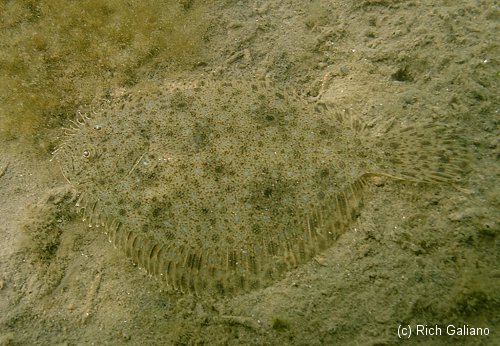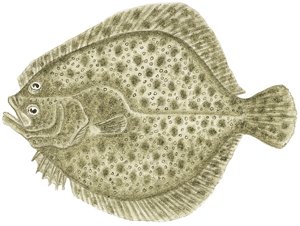
Windowpane

Windowpane

Scophthalmus aquosus

Size:
to 18"
usually much smaller

Habitat:
Soft sandy bottoms,
in depths from water's edge to 150 ft.

Description:
This is a left-eyed flounder. Identifying characteristics are the nearly circular body shape and the free rays of the dorsal fin, which form a frill near the eye. The Windowpane is common but very thin and too small to eat. It is the sole new-world representative of the turbot family, which is commercially important in Europe.
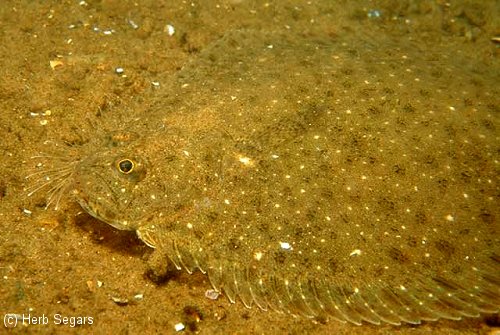
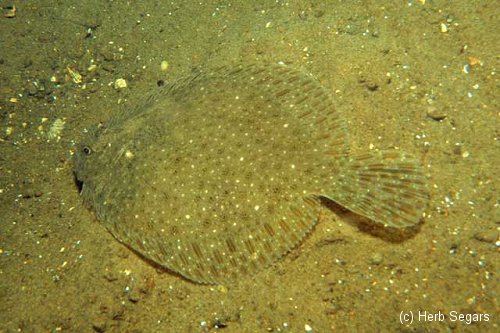
Windowpane
Herb Segars Photography

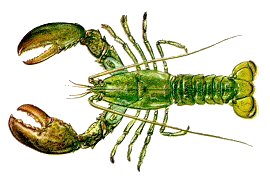
Homarus americanus

Size: to 36" and 45 lbs. (record)

Habitat: subtidal to the edge of the continental shelf, in any sheltered spot

Notes:

Lobsters differ from shrimps in having three pairs of clawed legs, the first with very large claws. Southern "Spiny Lobsters" are only distantly related; freshwater crayfish are closer. Lobsters, or "Bugs", are mainly nocturnal, and feed primarily on living or freshly killed food rather than scavenging on carrion, as was once thought. Although they are predominantly solitary creatures, lobsters do have a sort of social life amongst themselves. Males are more aggressive than females and will form pecking orders among individuals in an area. Female lobsters apparently seek the protection of a male when molting, then mate afterward. Lobsters shed their shells once or twice a year, depending mainly on the temperature.