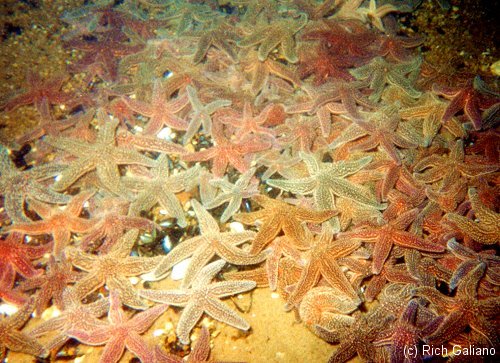
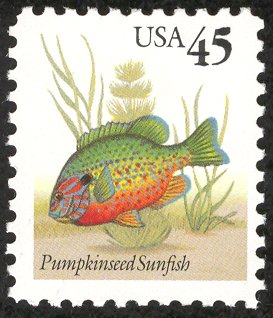
Pumpkinseed Sunfish
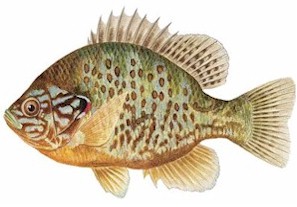
Sunfishes ( family Centrarchidae, along with freshwater basses ) thrive in small, shallow lakes, sheltered bays of larger lakes, and quiet areas of slow-moving streams. Pumpkinseeds (right) are normally found in shallower water and denser vegetation than Bluegills and Redears. Adult and larval insects make up most of the diet, but sunfishes also eat snails and fish fry.
Sunfishes spawn in later spring or early summer, usually at water temperatures from 66°F to 70°F. Males build the nests on a sand or fine gravel bottom at depths from 6 to 18 inches. After spawning, males guard the eggs and fry. In one study, males were seen apparently eating fry that had strayed from the nest, but closer observation revealed that they carried the fry back and spat them out on the nest.
Sunfishes may live up to 10 years. They grow slightly faster in the northern states and Canada than in the southern part of their range, probably because of their preferences for cooler water. Males grow somewhat faster than females.
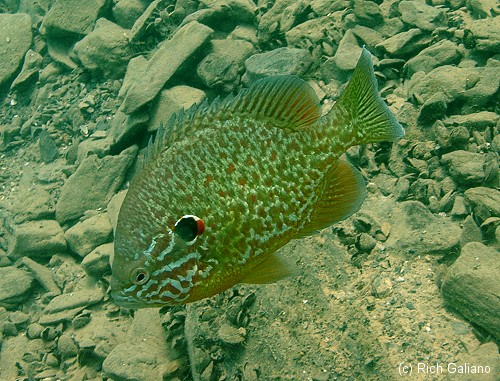
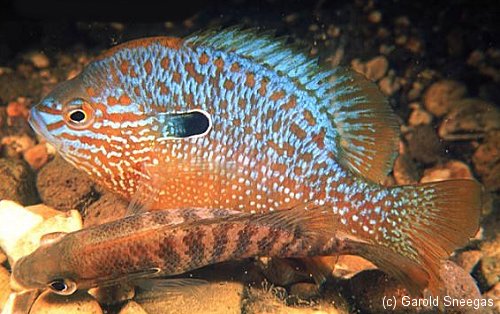
While most of the local Sunfish species are attractive, none are as spectacular as the midwestern Longear Sunfish, especially when it is in breeding colors.
Freshwater gamefish such as trout and bass may not be taken by spear by divers. However, in some places, it may be legal to spearfish for carp, catfish, suckers, and other "rough" fishes - check local regulations.
More: Midwater Fishes ...