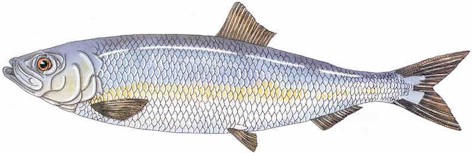
Herrings
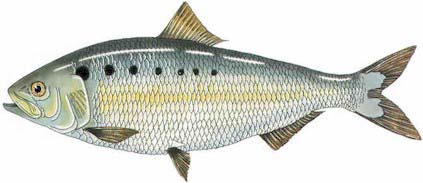
American Shad
( right )
Alosa sapidissima
Size: to 30" and over 9 pounds
Habitat: coastal and estuarine waters
Notes:
Oceanic adult herrings spend their days deep and come up to the shallows at night to feed, so you are not very likely to see them. Small ones may be more commonly found in inshore waters. Sometimes the marinas and inlets are full of tiny immature herrings known as "Peanuts." Saltwater herrings ascend rivers to spawn. All herrings are primarily filter-feeders, although larger ones may also be predatory on small fishes, squids, and other prey.
Shad is the largest member of the herring family. They are highly sought-after as sport fish when they make their annual upriver spawning migration in the spring. Some landlocked shads may spend their entire lives in freshwater. Menhaden is another of the many local species of herring.
All herrings and their small cousins sardines share the same saw-tooth scales on the belly, giving them the name "saw-bellies". That's why the Knights of Ni demanded that King Arthur "cut down the tallest tree in the forest with ... a herring!" -- from Monty Python and the Holy Grail