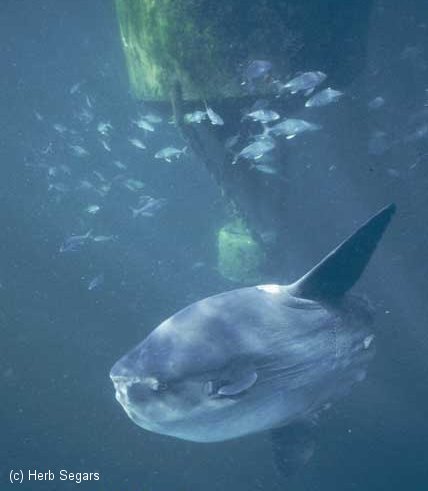
Ocean Sunfish
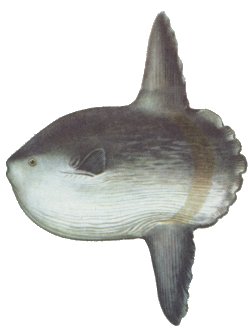
Mola mola
Size:
to 10 ft long, 11 ft tall, 4400 lbs,
but usually 4-5 ft long
Habitat:
Open ocean, usually basking near surface. This giant, slow-moving creature flaps along at the surface, propelled by its oar-like dorsal and anal fins and steering with the stump of its tail.
Notes:
Ocean Sunfish are not as rare as you might expect. I have sighted them numerous times from the boat, and once had the pleasure of swimming with a large pair, an encounter that ranks right up there with anything the tropics can offer ( well, almost anything. )
You would think that an animal that flaps around all day and eats jellyfish for a living would not have much need for brains. Yet Sunfish share their Triggerfish cousins' intelligence and curiosity and are drawn to investigate anything unusual, including boats, anchors, buoys, shadows, noises, bubbles, and divers themselves.
Despite their ungainly looks, a sunfish can easily outpace a diver. Their skin and bodies are visibly riddled with parasites, and for this reason, they are inedible.
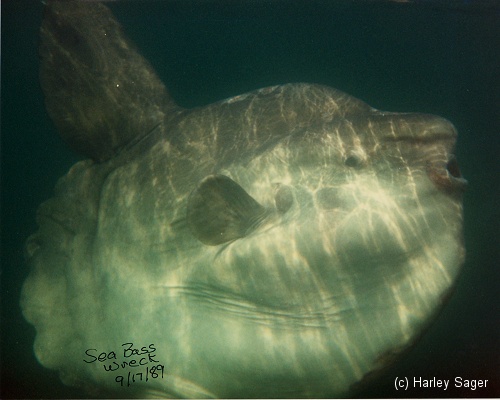
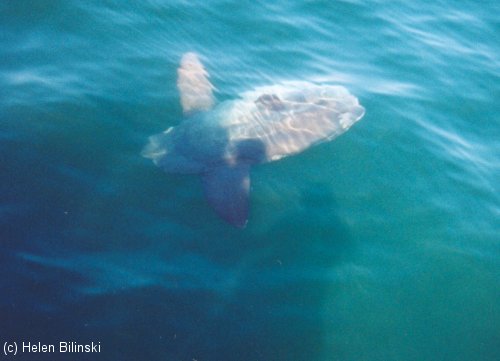
Note the photographer's shadow for scale.