
Northern Coral
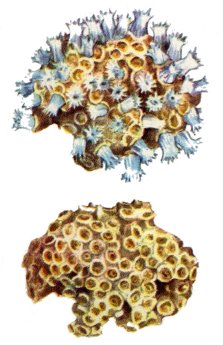
Most tropical corals contain photosynthetic algae which provide a substantial amount of the polyp's food. White Encrusting Coral, also known as Northern Stony or Star Coral, contains no such algae and therefore can survive the low light conditions and temperatures of the North Atlantic where other corals would die. Instead, it is a filter-feeder, much like an anemone.
Corals are similar to anemones in many ways. Each coral polyp is like an anemone in a stony cup. Many corals are colonial ( as are some anemones ) sharing a single merged body among many polyps.
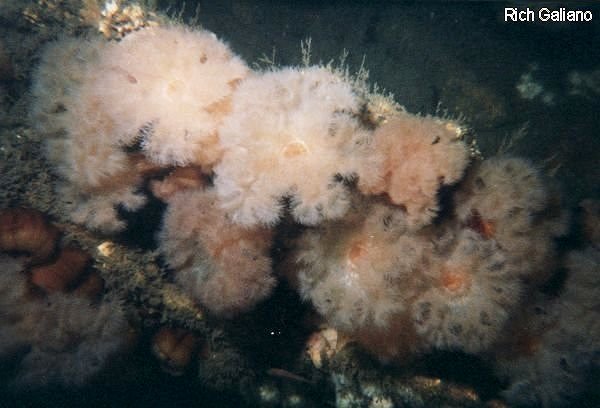
The live colony, with extended polyps, is pictured above; the skeleton below.
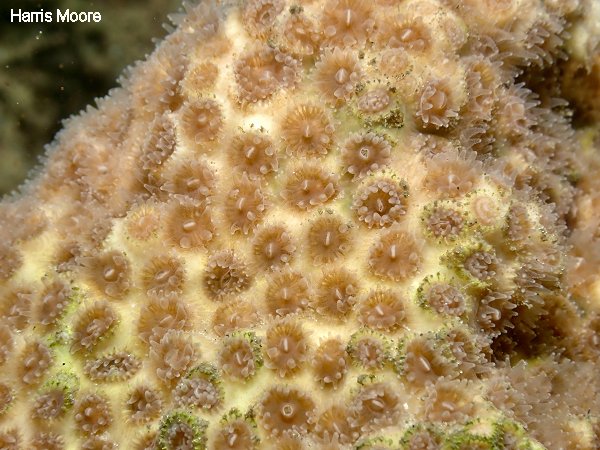
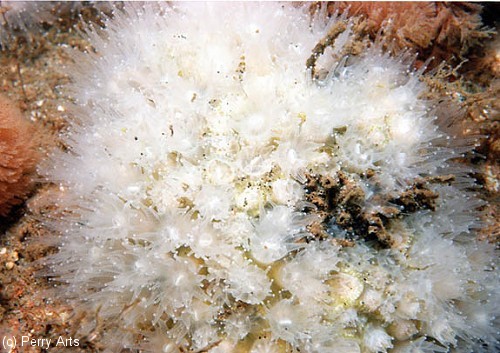
Northern Star Coral is found on hard substrates, subtidally to 130'. It is found in colonies of up to thirty polyps that can have a diameter up to 5". The size of a single polyp is up to 0.4". The coral's color is off-white to pink, but animals that live in some areas can be translucent.
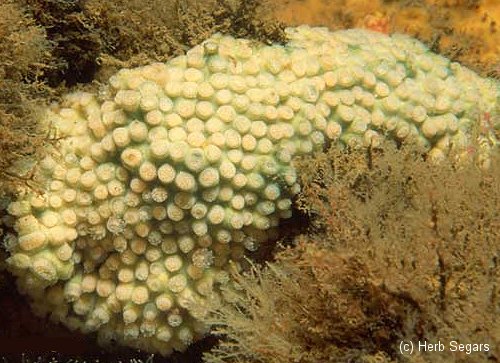

All these are animals that, in a sense, occupy the physical niche of the plants which are missing from the deeper parts of the marine environment. All are filter-feeders, straining plankton from the surrounding waters.
More: Plant-like Animals ...