Spider Crabs
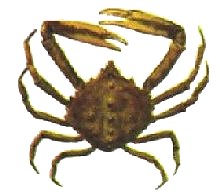
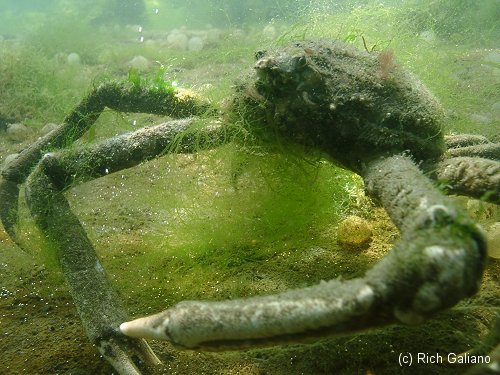
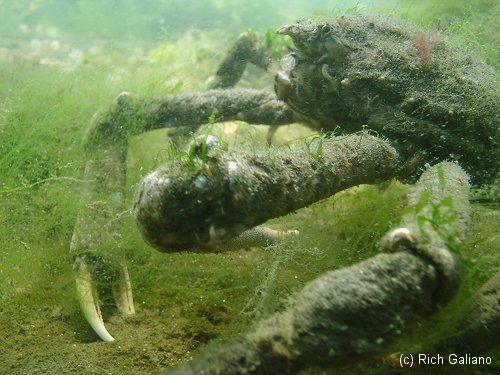
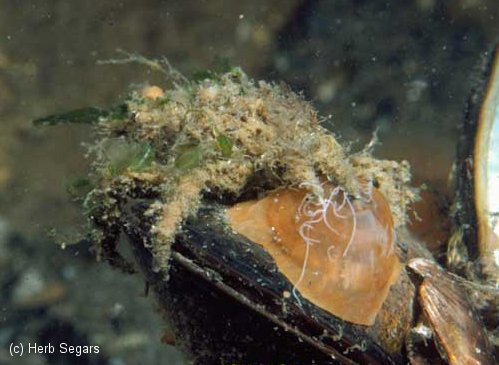
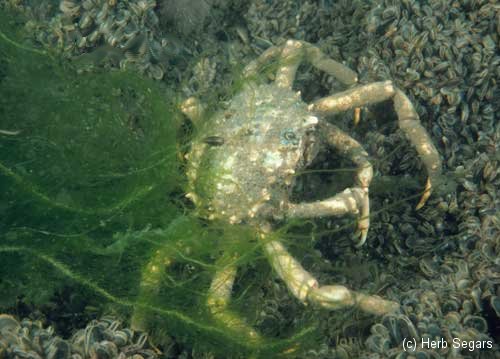
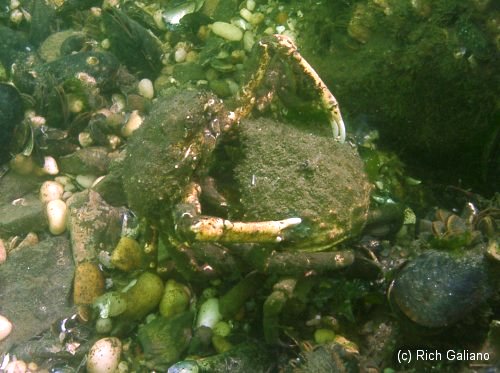
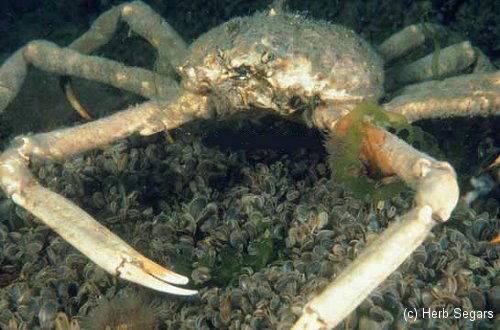
Spider Crabs Libinia emarginata are scavengers. Although they are fearsome-looking, they are actually slow-moving, and their usual claws-out threat display is mostly bluff. Spider Crabs have relatively small round bodies (to 4"), long legs, and rather weak claws. They are found subtidally to at least 160 ft, on any type of bottom, and are very common in rivers and inlets. They often cover themselves with detritus for camouflage, and can also burrow in soft sediments.
A related species is used for food in Europe. The only thing more unattractive than a Spider Crab is two of them mating.

These are all so-called "true crabs".
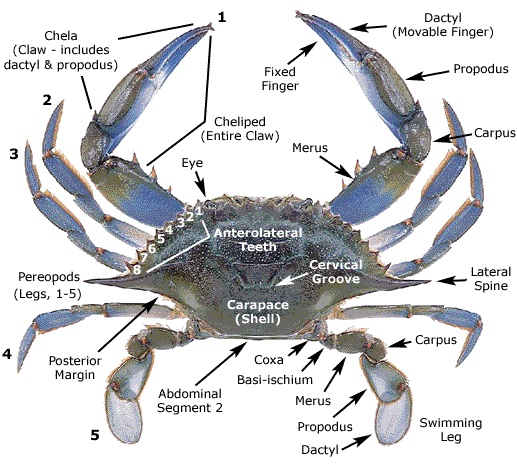
True crabs are crustaceans with extremely reduced tails, which are carried folded under the body. Males are generally larger than females. Presented here are just the most common of many local species. Sizes quoted below are body width. Hermit Crabs are listed elsewhere. They are not closely related.
More: Crabs ...