
Salamanders

Salamander

many species

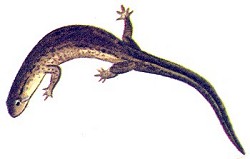
Salamanders are terrestrial as adults, but eggs and larvae are aquatic. Larvae have both gill slits and external gills. A few species are completely aquatic, retaining these features as adults. Some salamanders are boldly colored and patterned and easy to identify, but many are simply small and brown and very difficult to tell apart, like this one.
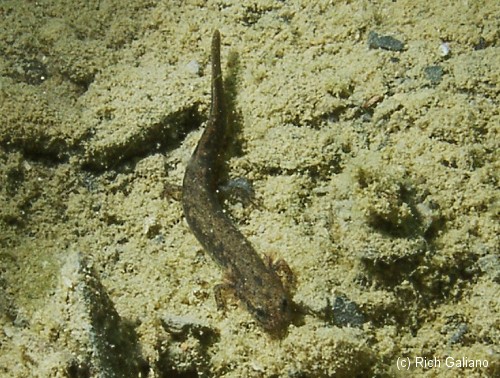
A tiny larval salamander

A tiny larval salamander at Dutch Springs. Possibly some kind of Dusky Salamander.


Tunas

by Bruce Freeman

Six of the world's 13 tuna species occur off New Jersey each year. Among the most beautiful and powerful of sea creatures, the tops of their heads and their upper backs are either solid or wavy lines of dark, lustrous, metallic blue. Their sides are silver or silver-gray, often with silvery spots, bands, and iridescent hues of purple, pink and gold and silvery-white on the belly. Most young tunas have striking vertical bars along the body flanks, although these disappear with age. The beautiful coloration and patterns serve as camouflage.