Contamination Risks of Artificial Reefs and Shipwrecks
by Michael C. Barnette

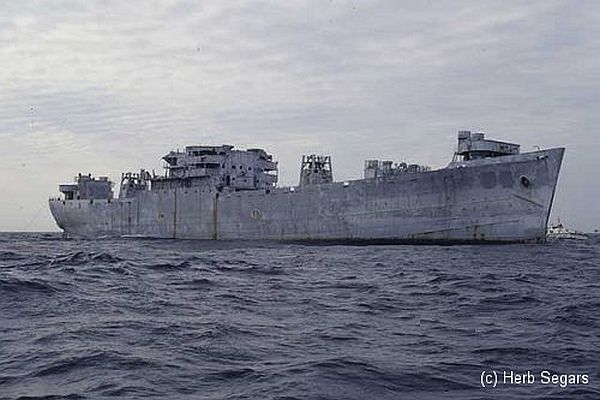
Poly-chlorinated biphenols (PCBs) and heavy metals ( Pb, Cu, Ni, Cd, Zn, Ag, and Hg ) have become an issue of concern with artificial reef development, as popular reef building materials ( e.g., ex-Navy vessels ) may contain quantities of these toxic materials that may potentially be transferred through the food chain. This transference, or bioaccumulation, may have unforseen effects on the marine environment and, ultimately, human health through consumption of contaminated finfish and shellfish harvested from these reefs. However, thousands of ships have met their demise without the environmental cleansing and preparation that artificial reefs require, perhaps posing a potentially greater health risk to consumers and divers.
The main use of PCBs in naval ships is for its fire-retardant properties, an important quality for warships. Possible sources of PCBs and heavy metals include:
- Transformers - This not considered a problem on vessels, as power onboard a vessel is generated at the voltage needed. Therefore, there is no reason for large PCB oil-filled transformers to step down voltage. Instead, smaller sealed capacitors are utilized.
- Oil-impregnated felt - Large amounts of PCBs were discovered in felt used in submarines as a sound dampener. However, a similar type of felt was utilized in ventilation ducts to seal flanges, and are found on most naval ships. Large ships may have up to 1,000 of these flanges. The specifications for this felt required fire-resistance, but not specifically for PCBs. In tests, 60% of these contained no PCBs, but this may vary by date and manufacturer.
- Electrical cable coverings - PCBs were used by some manufacturers for its fire-retardant properties. However, in tests 80% of cable contained no trace of PCBs. Due to the large number of cables on a naval vessel, further study is warranted.
- Rubber gaskets - gaskets around hatches and waterproof seals contain PCBs but are not considered a leachate problem.
- Paint - interior enamels and deck paint had PCBs added to them, again for fire resistance. Exterior gray paint did not have PCBs included, however, lead was always an additive, and therefore a source of heavy metal contamination. PCB leaching from paint is not considered a problem.
- Hydraulic fluids - prior to the 1970s (when they were phased out), hydraulic fluids did contain PCBs. Due to frequent changing of these fluids in maintenance, this is not considered a threat source. Furthermore, all liquids are required to be removed from a vessel prior to its intentional sinking.
Sources of heavy metals include
- lead in ballast
- copper and zinc in wiring
- copper, nickel, and cadmium in seawater systems.
Asbestos was widely used on many vessels, but tests have not been conducted to review the extent of environmental contamination.
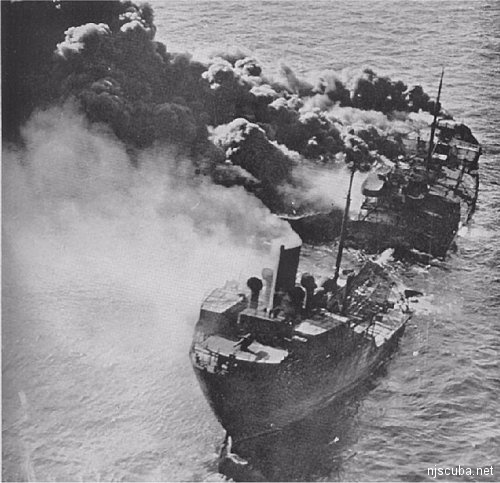
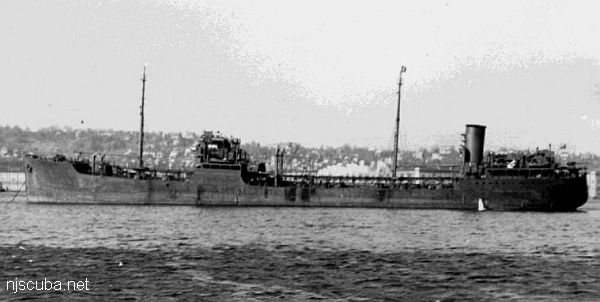
The above examples do not include environmental risks that may occur from war casualties or accidents. During World War I and II, many tankers were sunk that continue to release their cargo of petroleum products into the environment. Additionally, many other vessels that were lost contained chemicals, fuel, and paint (cargo) that present a potential (localized) environmental contamination hazard. Yet, no studies have been conducted to assess these potential risks to the environment or to visiting divers. Anecdotal evidence of at least one incident, during exploration of the wreck of the Andrea Doria off Nantucket, involved a diver becoming impaired after contact at depth with paint and other chemicals, has yet to be conclusively proved.
Data from the US Navy has been taken from hundreds of samples from several decommissioned ships. Modeling results (for the SINK-EX project) estimated that, on average, a naval vessel would contain 30 pounds of PCBs per vessel. Furthermore, it was estimated that all exposed PCB material would leach out to the environment over approximately 26 years. However, these estimates may vary based on depth, temperature, and surface area.
A study conducted by the South Carolina Department of Natural Resources, in an effort to determine the biological effects of contaminants on artificial reefs, extensively sampled edible finfish and shellfish species, as well as many other benthic invertebrate species. All samples of edible species proved to be well within threshold levels established by the Environmental Protection Agency (EPA) as safe for consumption. A few samples of invertebrate species, such as angel wing oysters, contained contaminant levels well above safe and acceptable limits; this was attributed to direct grazing on surfaces that contain potential contaminants. It should be noted that this study focused on prepared artificial reefs, and not on war casualties or other shipwrecks.
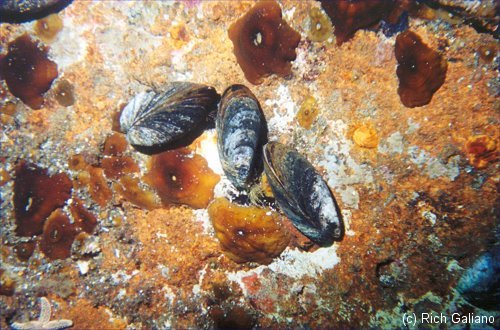
Available information would indicate that no appreciable risks to the average diver from consumption of seafood exists, though there is potential. Bioaccumulation of contaminants might occur, but on levels that would probably not risk the long-term health of an individual consuming average levels of seafood. As consumption of invertebrate species harvested from artificial reefs and shipwrecks does occur, individuals should abstain from collecting urchins and other grazing shellfish from surfaces where loose paint is observed. Furthermore, the collection of shellfish for consumption from the interior of wrecks - where there is a greater threat of grazing on (PCB) contaminated surfaces or of contaminants accumulating in sediments - should be avoided.
Michael C. Barnette is the Founder and Director of the Association of Underwater Explorers, a coalition of divers dedicated to the research, exploration, documentation, and preservation of submerged cultural resources. Employed as a marine ecologist with the National Oceanic and Atmospheric Administration (NOAA), he recently published Shipwrecks of the Sunshine State: Florida's Submerged History, which offers an extensive and comprehensive cross-section of Florida shipwreck narratives.
Levels of PCBs and Heavy Metals in Biota Found
on ex-Military Ships Used as Artificial Reefs
Robert M. Martore, Thomas D. Mathews, and Melvin Bell
Marine Resources Division
South Carolina Department of Natural Resources
PO Box 12559
Charleston, SC 29422-2559
Contribution number 419 from the South Carolina Marine Resources Center
ABSTRACT
Resident fish and invertebrates were collected from several ex-military ships which had been sunk as artificial reefs and from naturally occurring "hard bottom" reef sites in order to determine the levels of PCBs and heavy metals present and to assess whether or not any environmental or human health concerns existed as a result. Tissues were analyzed for PCBs, chromium, cadmium, lead, copper, nickel, and manganese. Although PCBs were found in many samples, levels were not elevated at artificial reef sites and all values detected were well below the FDA action level of 2.0ppm. Similar concentrations of certain heavy metals were also detected, again with no apparent trends among sites. There do not appear to be increased levels of PCBs or heavy metals in biota on or around military ships sunk as artificial reefs and the risk to human health appears no greater than that posed in any naturally occurring hard bottom area.
INTRODUCTION
Marine artificial reefs play an important role in most Atlantic and Gulf coast states by significantly enhancing recreational fishing and sport diving opportunities in coastal and offshore waters. From the earliest days of artificial reef development, many states have relied upon the use of surplus vessels (ships, boats, barges, etc.) to provide suitable, stable, and affordable materials from which to construct these reefs. As of 1994, over 650 vessels had been reported sunk on permitted reef sites by Atlantic and Gulf coast marine artificial reef programs, with many of the ships and smaller craft having been former U.S. military property (GREGG and MURPHEY, 1994).
In recent years, concerns have been raised by the U.S. Environmental Protection Agency (EPA) regarding the possibility of the introduction of polychlorinated-biphenyls (PCBs) into the marine environment through the sinking of former military ships as U.S. Navy exercise targets and as marine artificial reefs. MEARNS, et al (1988) provides a thorough review of PCB contamination concerns and findings from a historical basis.
The PCBs of concern to the EPA are now known to exist in many different components on ex-U.S. Navy vessels. Formerly approved methods and levels of cleaning ex-Navy vessels for sinking as exercise targets or marine artificial reefs are no longer acceptable to the EPA based on the determination in recent years that many materials onboard, such as water-tight gaskets, cable insulations, paints, and other heat resistant components may contain some levels of PCBs. This has led to a restriction on the Navy's use of ships as exercise targets and halted the sinking of Navy ships as marine artificial reefs.
The South Carolina Department of Natural Resources (SCDNR) has been active in the development of marine artificial reefs along the South Carolina coast since 1972, with many artificial reefs constructed from surplus U.S. Navy, U.S. Army, and civilian vessels. Based on the concerns raised by the EPA over sinking ex-Navy ships, the SCDNR wanted to assess whether or not past artificial reef construction activities have unknowingly resulted in the placement of PCBs into the marine environment through the introduction of PCB-containing components onboard ships and other vessels sunk as marine artificial reefs. Additionally, the SCDNR wished to learn if PCBs and/or certain heavy metals could be found in the tissues of marine organisms which were permanent or temporary residents of artificial reefs constructed from such vessels and if so, the extent of environmental or human health concerns which existed as a result.
Although not a primary focus of this study, the question of the release of various trace or heavy metals by artificial reefs was also considered. Ship hulls were not viewed as potential sources of harmful metals since they were constructed of steel, however, the hull and interior paints of some vessels and certain installed ship components and equipment were possible sources.
METHODS AND MATERIALS
During routine artificial reef monitoring activities, over 100 samples of reef materials, resident invertebrates, and resident finfish were collected from several locations along the South Carolina coast, including permitted artificial reefs and naturally occurring "hard-bottom" reefs ranging in water depths of 80 to 110 feet (24 to 34 meters) (Figure 1). Artificial reef structures chosen for this study were primarily ex-military (U.S. Navy and U.S. Army) vessels having been submerged from 3 to 17 years at the time of sampling. Corresponding hard-bottom control sites were located approximately 3 to 5 miles from the artificial reef sites, close enough to be of similar depth and with similar fish communities.
All vessel component and invertebrate samples were collected by SCUBA divers, while finfish samples were taken by a combination of methods, including pole-spear, hook-and-line, and fish traps. Finfish species known to be long-term residents of artificial reefs were targeted when available, as well as resident species which are commonly landed and consumed by recreational anglers. Recreational size limits were adhered to in order to approximate a typical angler's catch and to insure comparisons of similar size and age. Any available shellfish and crustaceans were targeted when available. Samples were sealed in plastic bags and frozen immediately for transport to the laboratory for preparation and analysis.
Only muscle tissue from finfish was used, while the soft parts of crustaceans and shellfish were prepared. Small sections of several sponges and one echinoderm were processed in their entirety. Where possible, samples were analyzed for PCBs and metals, however, some shellfish samples were too small to be subdivided. The suite of PCBs run included the following: 1221, 1248, 1254, and 1268. The basic PCB methods used were reported in MAtheWS (1994) and were a refinement of techniques used in MARCUS and MAtheWS (1987) with some variations. The PCB extractions were performed as for pesticides with methanol, isopropanol, and acetone (2:1:1 v:v), but the extract plus water used for the final concentration was adjusted to a pH of 2 with HCl. The limit of quantitation (LOQ) was 100ppb for the PCBs, although they were detected at much lower concentrations. Non-detection values (ND) were 10ppb.
The only change in the metals analyses from methods used and reported in MAtheWS (1994) was in the use of an inductively-coupled plasma (ICP) instrument as opposed to an atomic absorption (AA) spectrophotometer. Chromium, cadmium, lead, copper, nickel, and manganese were run. Metal LOQs were 100ppb for all metals except cadmium, which was 50ppb. Non-detection values (ND) were one-tenth of LOQ. At least one sample was split and analyzed both spiked and unspiked with each batch of ten samples for quality control purposes in addition to reagent blanks for PCBs and metals. All PCB and metal concentrations were calculated as wet weight (ww).
RESULTS AND DISCUSSION
PCBs
Three of the seven vessels from which biological samples were collected were found to have materials onboard which contained PCBs (Table 1). Thorough stripping of all seven of these vessels during pre-sinking cleaning resulted in a scarcity of accessible materials potentially containing PCBs, making it impractical or unsafe to attempt to locate additional suspect materials in internal spaces on several of the vessels. While the cables and gaskets retrieved from three vessels clearly had PCBs remaining in them, ranging in concentrations of 1.3ppm to 24.5ppm, the original concentrations of PCBs in these materials at their time of submergence is unknown. It should be noted that higher concentrations of PCBs could possibly be obtained from these materials through the use of more vigorous extraction methods.
From the wide variety of resident reef organisms collected, 80 tissue samples were analyzed for PCBs (Tables 2 through 5) yielding PCB concentrations ranging from 0 to 0.337ppm in finfish and 0 to 0.235ppm in mollusks. Only 19 of the organisms sampled (4 finfish, 14 mollusks, and 1 echinoderm) were found to contain PCBs in concentrations above the 100ppb ww LOQ, with all being well below the USFDA alert action level of 2.0ppm ww.
While it is apparent that PCBs exist in the tissues of some organisms collected from sunken vessels, no significant differences in PCB concentrations were detected (Kruskal-Wallis one-way ANOVA, p=0.268) between biological samples taken from vessels found to contain PCB-laden materials and those taken from natural "hard-bottom" control sites or target vessels where the presence of PCBs in onboard components was possible but not confirmed. Levels of PCBs encountered in organisms from both target vessels and control sites fall within ranges of PCBs encountered in finfish and mollusks in other studies along the Atlantic Coast and elsewhere (MEARNS et al., 1988), and do not indicate that the artificial reef structures examined represent potential "hot spots" where PCBs are being bioaccumulated.
Although not strictly comparable due to species differences, the mean value of 0.098ppm ww (based on all values above and below the LOQ) for PCBs encountered in bivalves from target vessels is somewhat higher than the grand national median of PCBs in the 1986 NOAA Mussel Watch Survey of 0.015ppm ww (NOAA, 1987). The mean and range of PCB values for bivalves taken on artificial reefs, however, are still well below the 2.0ppm FDA action level and, it should be noted, the bivalve species found on the artificial reefs are not targeted for human consumption. Adequate bivalve samples were not located on control sites for comparative purposes.
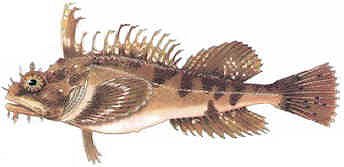
The mean PCB concentration obtained from finfish sampled on target vessels was 0.050ppm. This value is half that of the nationwide average of approximately 0.10ppm detected in estuarine fish between 1972 and 1979 (BUTLER and SCHUTZMANN, 1978), and also less than a 1976-77 survey mean (0.88ppm) of fish encountered in U.S. inland waters (SCHMITT et al., 1985). While it could be argued that many of the finfish sampled were not permanent residents of any site from which they were collected, it is felt that at least the toadfish (Opsanus pardus and O. tau) were a reasonable representative of a finfish species with a broad-ranging diet that tended to remain closely associated for life with artificial or natural reef structure. Of the 14 toadfish sampled only one had a PCB concentration above the 100ppb LOQ. No fish sampled at any site approached the FDA 2.0ppm action level.
These findings suggest that even with PCBs remaining in some materials onboard vessels years after sinking, these compounds are not being bioaccumulated in artificial reef organisms to a greater degree than they are among organisms found on non-artificial reef sites. The presence of PCBs in bivalves collected on target reef vessels appears to represent no direct health risk to artificial reef users due to their low values and, more importantly, because none of these species is typically consumed by humans. Of the 23 finfish sampled which are commonly consumed by fishermen, two of the three samples in which PCBs above the 100ppb LOQ were detected came from natural "hard-bottom" control sites and all quantities detected were relatively low. Thus, from the samples taken in this study, fish caught on sites other than artificial reefs represented the greatest degree of PCB exposure through direct human consumption.
Heavy Metals
Results of the metals analyses from the same tissue samples taken for the PCB work are found in Tables 6 through 9. No samples of man-made materials on the vessels were run as for PCBs. Although individual tissue samples may be moderately high in a particular metal, no clear correlation of high metal levels and a particular type of sample site (control versus ship reef) exists. Table 10 summarizes mean concentrations of metals encountered in the samples and compares them to international action limits established for chromium, cadmium, lead, and copper (NAUEN, 1983). No similar limits were found for nickel and manganese.
While the mean cadmium concentration in bivalve samples taken from ship reef sites (1.547ppm) is about three times the international action limit (0.500ppm), the mean level for cadmium in control site bivalves (1.400ppm) was equally high. Previous work off South Carolina (MAtheWS and BELL, 1994) also revealed no significantly higher levels of cadmium or lead in sessile invertebrate and fish tissues sampled on automobile tire reefs versus "hard-bottom" control sites.
Much higher levels of lead were found in some gastropods removed from artificial reefs when compared to low numbers for bivalves and fish off the same site. This is most likely attributable to these organisms grazing directly on the painted surfaces of the ships and ingesting minute quantities of lead-rich paint in the process. In examining other organisms, no indication of bioaccumulation of lead in higher trophic levels exists.
As in the case of PCBs, these results indicate that while high levels of certain metals may be encountered in some individual organisms from artificial reef ships, the same or closely related organisms taken from natural hard-bottom areas are also likely to yield similar results. The data from this study suggest that artificial reefs constructed from ex-military and other ships offer no higher degree of environmental risk associated with the bioaccumulation of heavy metals than might be experienced on natural hard-bottom reef locations. The degree of human health-related risk is also equally low.
CONCLUSIONS
The presence of PCBs and heavy metals in organisms from natural and artificial reefs attests to the fact that these substances are present in marine waters. However, the relatively low values detected and the similarity in values between sites indicates more of a general background level rather than any particular area of increased contamination. The presence of these chemicals may, in fact, be universal. As stated by MEARNS et. al., (1988) in their historical assessment of PCB contamination ". . . They persist and are still found in terrestrial, aquatic, and marine plants and animals throughout the United States and the world." the levels detected in this study clearly do not indicate increased hazards around the military ships used as artificial reefs. The risk to human health appears no greater there than that posed in any naturally occurring area.
ACKNOWLEDGEMENTS
This project was conducted in cooperation with the U.S. Department of Interior, U.S. Fish and Wildlife Service, and funded in part by the Federal Aid in Sport Fish Restoration Act (16 U.S.C. 777-777k). The authors wish to thank Daryl Stubbs and Doug Mellichamp who greatly assisted in underwater sample collection, and Hubert Attaway for technical support in the chemical analyses. Dr. Fred Holland provided a helpful review of the manuscript.
LITERATURE CITED
BUTLER, P.A. and R.L. SCHUTZMANN. 1978. Residues of pesticides and PCB's in estuarine fish. National Pesticide Monitoring Program. Pest. Mon. J., 6(4), 238-362.
GREGG, K. and S. MURPHEY, 1994. The Role of Vessels as Artificial Reef Material on the Atlantic and Gulf of Mexico Coasts of the United States. Atlantic States Marine Fisheries Commission Special Report No. 38, 16p.
MARCUS, J.M., and T.D. MAtheWS, 1987. Polychlorinated biphenyls in blue crabs from South Carolina. Bull. Environ. Contam. Toxicol., 39, 857-862.
MAtheWS, T.D., 1994. Contaminants in recreationally important estuarine finfish from South Carolina. Bull. Environ. Contam. Toxicol., 53, 412-419.
MAtheWS, T.D. and M. BELL. 1994. Heavy metal and PAH uptake on tire/concrete artificial reef units off South Carolina. USF&WS Sportfish Restoration Project F-54(2) Annual Report, 11p.
MEARNS, J.A., M.B. MATTA, D. SIMECEK-BEATTY, M.F. BUCHMAN, G. SHIGENAKA and W.A. WERT, 1988. PCB and Chlorinated Pesticide Contamination in U.S. Fish and Shellfish: A Historical Assessment Report. NOAA Technical Memorandum NOS OMA39. Seattle, Washington, 140p.
NAUEN, C.E. 1983. Compilation of legal limits for hazardous substances in fish and fishery products. FAO Fisheries Circ. No. 764, FAO of the United Nations, Rome, Italy.
NOAA, 1987. National Status and Trends Program for Marine Environmental Quality: Progress Report--A summary of selected data on chemical contaminants in tissues collected during 1984, 1985, and 1986. NOAA Tech. Mem. NOS OMA 38. Rockville, MD, 22p.
SCHMITT, C.J., J.L. ZAJIIK, and M.A. RIBICK. 1985. National Pesticide Monitoring Program: Residues of organochlorine chemicals in freshwater fish, 1980-81. Arch. Environ. Contam. Toxicol., 14, 225-260.