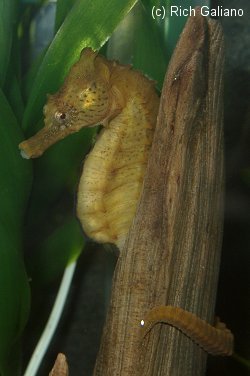
Lined Seahorse
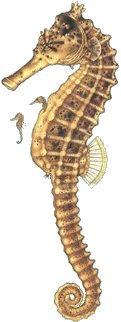
Hippocampus erectus
Size: to 6"
Habitat: Weedy protected shore waters.
Notes:
Look for Seahorses in still weedy areas, where they cling to plants and objects with their prehensile tails. Color and body form are highly variable, as these masters of camouflage adapt to their surroundings. Strays may be found at sea, or even washed up on the beach.
Locomotion is accomplished by fluttering the dorsal and pectoral fins, and they are extremely weak swimmers, utterly unable to buck a current. Males have a brood pouch where they incubate the eggs, then give birth to fully-formed miniature copies of themselves. Seahorses feed on plankton, which they suck up with their tubular snouts, making a distinct popping sound. They are tolerant of brackish water, but not fresh.