Haddock & Pollock
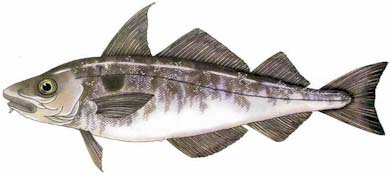
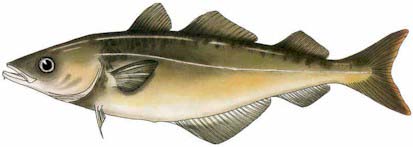
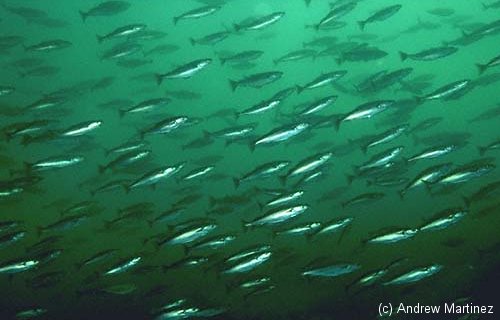
These two codfishes have similar-sounding names, looks, and habits. Both are much more likely to be found schooling in open water around the upper reaches of offshore wrecks and reefs than other bottom-hugging cod types.
Haddock Melanogrammus aeglefinus has a black shoulder spot and a high triangular dorsal fin, while Pollock Pollachius virens has more rounded fins and no spot. Pollock is the larger of the two, growing up to 70 lbs, although typically to 3 ft and 15 lbs, while Haddock is more typically 2 ft and 5-10 lbs. Both are good eating, although Haddock is considered the better of the two.
Cods - family Gadidae - are one of the most commercially important families of fish in the sea. As such, they have been fished to the brink of disaster. The book above is a fascinating study of the historical relationship between western civilization and the codfish.
The only freshwater representative of the cod family is the Burbot.
More: Cods & Allies ...