
Atlantic Cod & Tomcod
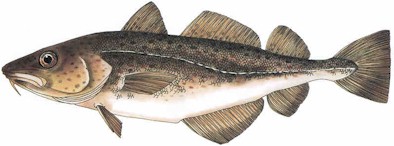
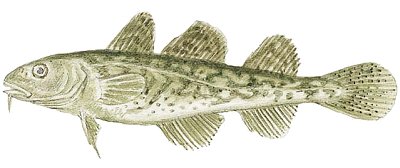
Cods are easily identified: they all have three separate soft-rayed dorsal fins and two separate soft-rayed anal fins. They also have a sensory barbel on the chin, although in some species this is so reduced as to be virtually absent.
Atlantic Cod Gadus Morhua have been devastated by centuries of overfishing, and large ones are now rare. Some scientists doubt whether the population can ever return to its former level.
Atlantic Cod grow to 4-1/2 ft and 60 lbs, although the record is 6 ft and 211 lbs. A typical fish nowadays is about 10 lbs. Cods are bottom-oriented, and likely to be found in dark places during the day. The meat is excellent eating. I have seen large individuals with an overall steel gray coloring, unlike the illustration.
The Tomcod Microgadus tomcod is a miniature Cod, growing to only 15 inches, and found in shallower waters than its bigger brothers. The rounded tail distinguishes it from other types. It may also ascend rivers.
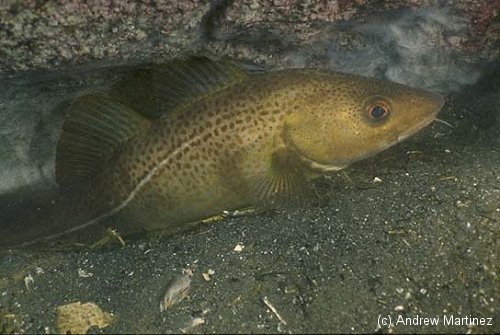
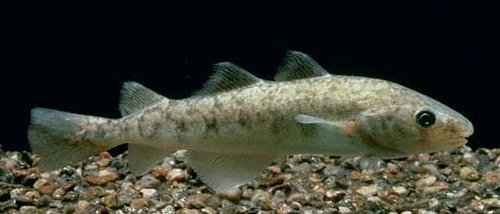
- Fishes of the Gulf of Maine - Cod
- US Fish & Wildlife Service Species Profile
- Fishes of the Gulf of Maine - Tomcod
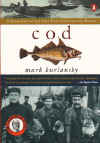
Cods - family Gadidae - are one of the most commercially important families of fish in the sea. As such, they have been fished to the brink of disaster. The book above is a fascinating study of the historical relationship between western civilization and the codfish.
The only freshwater representative of the cod family is the Burbot.
More: Cods & Allies ...