
April 2, 2025
Reef Program Dodges a Bullet
April 2, 2025
SS United States Finally Leaves Philadelphia to Begin Its Last Chapter
By Forrest Brown and Danny Freeman, CNN
Wed February 19, 2025
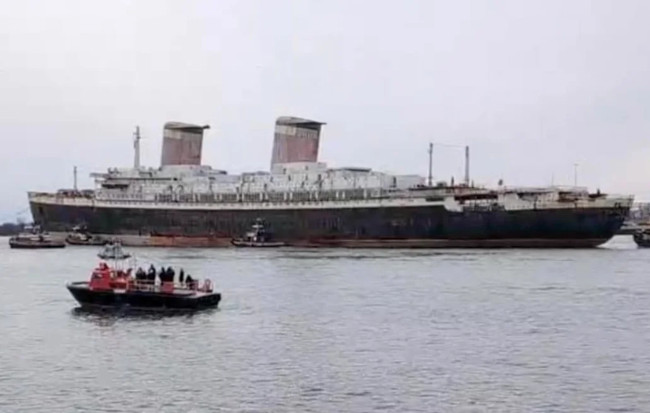
After months of multiple delays, the SS United States finally left its longtime home of Philadelphia just before 1 p.m. ET Wednesday. The storied ocean liner's next stop is Mobile, Alabama, where it will be prepared for its final mission - to become an artificial reef off the coast of the Florida Panhandle. The American maritime icon, nearly as large as the Chrysler Building, was launched in 1951 and set the transatlantic speed record in 1952.
"Today, the nation's sole surviving ocean liner will glide down the Delaware River to begin the next chapter in her uniquely American story," said Susan Gibbs, president of the SS United States Conservancy and granddaughter of the ship's designer, William Francis Gibbs, in statement just before ship left. After spending nearly three decades docked empty in Philadelphia, the tow to Mobile is expected to take about two weeks.
A Series of Delays

Observers of the SS United States' move had become accustomed to changes of plans. Last fall, the biggest hurdle came in the form of a "Captain of the Port Order" from the Coast Guard. The order said Florida's Okaloosa County, which is receiving the ship, needed to restore the ship's structural integrity before it would be allowed to depart. It was all set to go on February 6 when departure was again postponed "due to follow-up details requested by the U.S. Coast Guard to ensure a proper tow from Pier 82 to Pier 80."
New Mission: Artificial Reef
In the fall of 2024, Okaloosa County bought the ship to sink her and create the "world's largest artificial reef." The ship's final home will be under about 180 feet (55 meters) of water out about 20 miles (32 kilometers) in the Gulf of Mexico. For more than 70 years, the SS United States captivated the hearts and minds of Americans for her distinguished beauty. Among its passengers: multiple US presidents and Leonardo da Vinci's "Mona Lisa." She was withdrawn from service in 1969.
The admiration never ceased, and the ship's final fate has brought mixed emotions. "(It's) heartbreaking to see it go," said Kelly Micca in November. Micca spent several weeks painting a picture of the SS United States on an electrical pole across from the pier. "It's such a perfect landmark." On Wednesday, one commenter on the SS United States Conservancy's Facebook page said, "Poor gal deserved a better fate than what she's about to receive. The scuba videos will be interesting though."
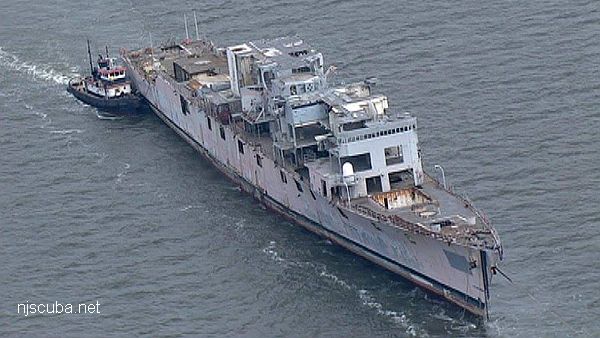
I can find no report of anyone going to the site since 2012!
The USS Radford paralyzed the Artificial Reef Programs of three states for over a year, to create a million-dollar pile of rubble too far offshore for anyone to bother with. The United States would have been an even bigger debacle, I am relieved to see it go. Such huge reefs far offshore might work in the Gulf of America, but not in the stormy and unpredictable North Atlantic. It's just common sense.