Sponges
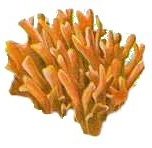
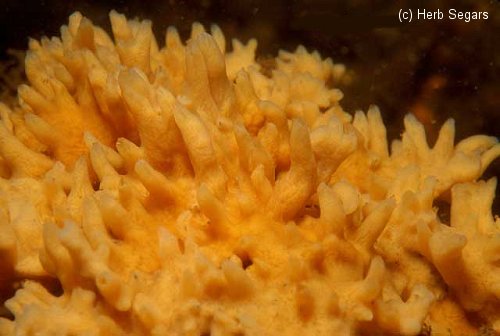
Sponges grow at all depths, and in brackish and freshwater also. They may occur as thin encrusting coatings on rocks and wood, or as long thin branching fingers attached to the bottom, or in the typical rounded form that has been used for centuries as ... a sponge!
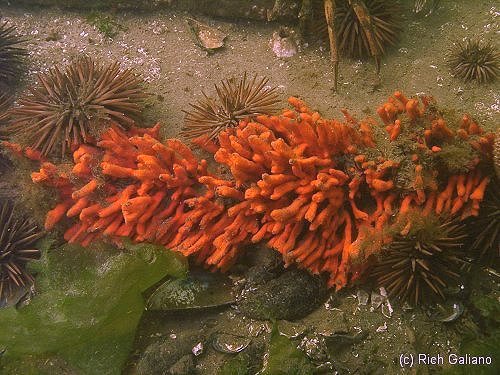
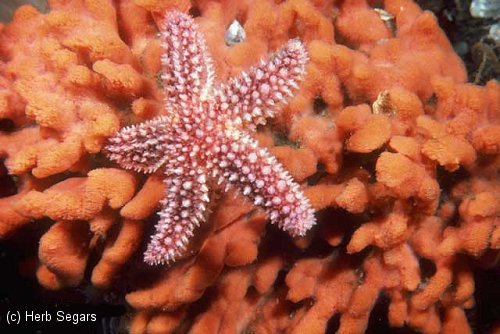
The Red Beard Sponge Microciona prolifera is the commonest and most colorful of several sponges that grow in the region. Sponges also occur in shades of yellow and white and often grow in a much lower, spreading, and encrusting form, especially in areas of high currents. They are the most primitive of multi-celled animals, lacking distinct tissues and organs.
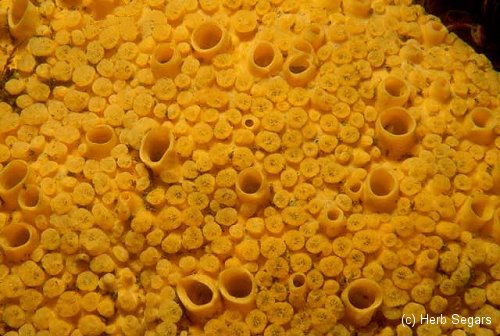
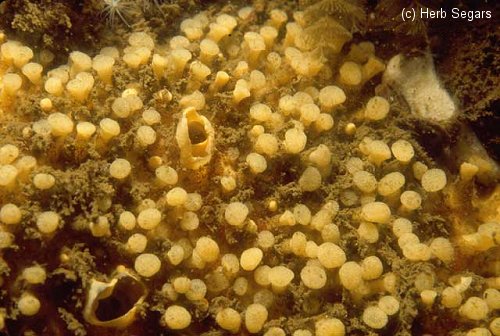
Boring Sponges typically grow on mollusk shells, such as Oysters. While not parasitic, they do eat away at the shell, causing stress and sometimes death for the mollusk.
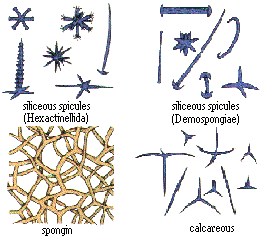
Sponges structure is based on microscopic interlocking spicules ( right ) which are built up from cell secretions. Depending on the species, these may take the form of pointed hard calcareous hooks or flexible nets. The spicules of some tropical species can cause severe skin reactions if the sponge is touched or handled. I am not aware of any such danger with northern sponges.
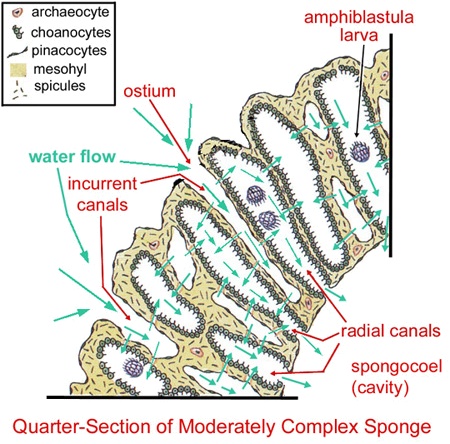
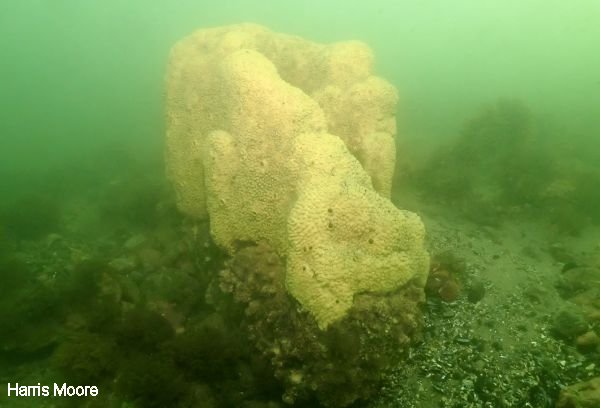
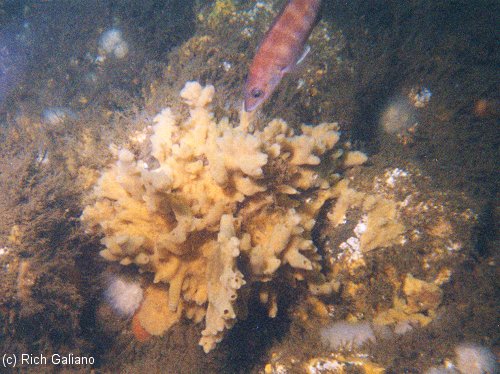
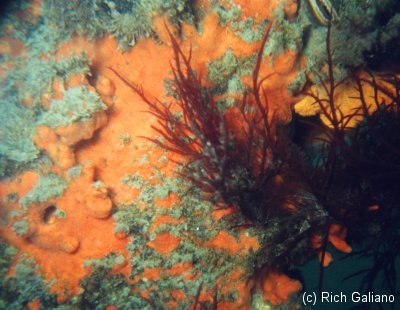

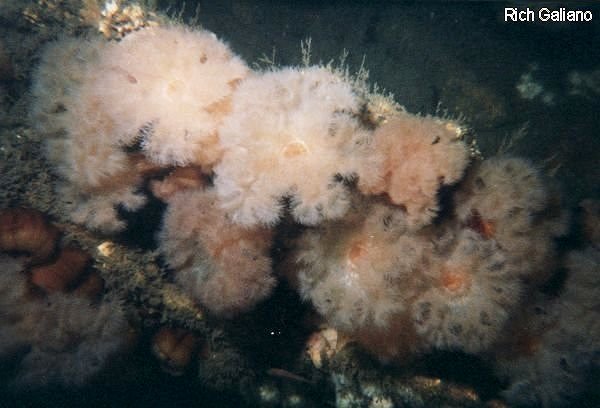
All these are animals that, in a sense, occupy the physical niche of the plants which are missing from the deeper parts of the marine environment. All are filter-feeders, straining plankton from the surrounding waters.
More: Plant-like Animals ...