Bryozoans

Bryozoans

Bryozoans are colonial animals of uncertain evolutionary descent. They may be related to freshwater rotifers. Bryozoans are found in the lower intertidal to subtidal zones, attached to a firm substrate, and also in brackish water. Individual animals are too small to see with the naked eye.

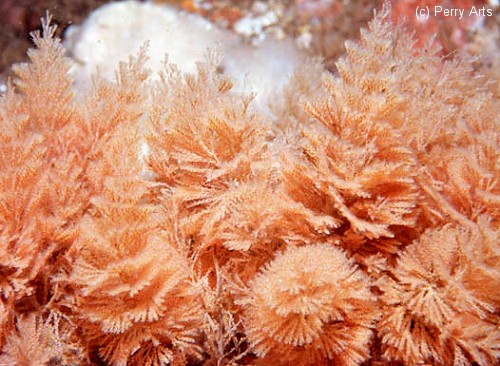
Bryozoan growth forms range from encrusting, forming coatings on hard surfaces, to bushy. An entire colony may bear a superficial resemblance to a hydroid colony, although bryozoans are internally more advanced than cnidarians. Bryozoan colonies grow to 3", and are occasionally larger.
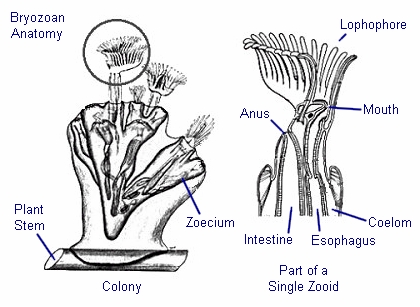
Bryozoan anatomy
Note separate mouth and anus, unlike hydroid
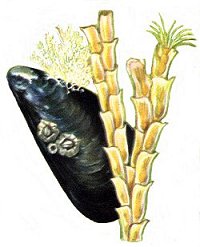
Spiral Tufted Byozoans
Spiral Tufted Byozoans Amanthia spp

wetsuit

The minimum exposure protection you should plan on for New Jersey diving is a full 6 or 7 mm neoprene wetsuit, with equivalent hood, gloves, and boots. A common misconception about wetsuits is that the water inside keeps you warm. This is absolutely false - the less cold water that gets in, the warmer you will be. ( Some folks actually bring jugs of hot water and pour it into their wetsuits just before the dive. ) Once the suit floods and the water inside warms up, you do feel better, but that water got warmer because you got colder. The trick is to keep as much as possible of this warmed water inside the suit, but almost every motion you make will pump out some warm water, and bring in more cold.

Two things will reduce this pumping tendency. The first thing is a properly sized and fitted suit. A wetsuit should be snug, without crushing you, and there should be no large empty spaces inside when you put it on. Many people have a hard time finding a wetsuit that fits just right. The second thing is a well-made suit. Features of a superior wetsuit include: