Tube Worms

Tube Worms

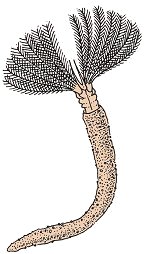
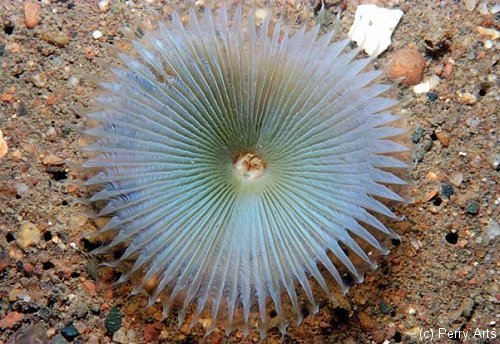
Tube worms live with their bodies buried in tubes that they construct in the soft bottom substrate. Fan Worms ( Sabella spp. and others, 1/8" to 8", right ) are among the most popular sights on tropical coral reefs. Few people realize that they are present in temperate waters as well.

Fan Worms, or "Featherdusters", have a frill of tentacles on the head with which they feed on plankton, and occasionally larger items. Food particles are trapped in sticky mucous and carried down into the mouth. Some Fan Worms have eyespots along the tentacles.

Despite appearances, Fan Worms are not related to any of the other tentacled creatures on this page but are actually polychaetes, related to clam worms.
Fan Worms
Myxicola infundibulum or something similar - note how the tentacles are joined almost to the ends, with no eyespots.
Fan Worms
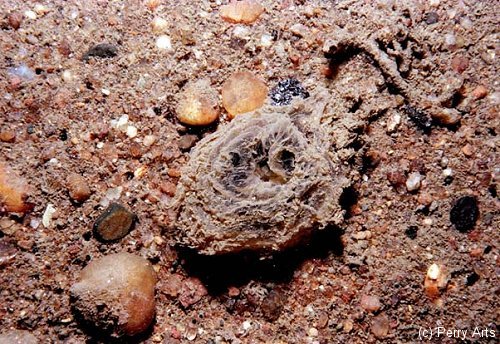
Fan Worms are extremely sensitive, and withdraw into their tubes at the slightest disturbance, leaving behind a ball of mucous.
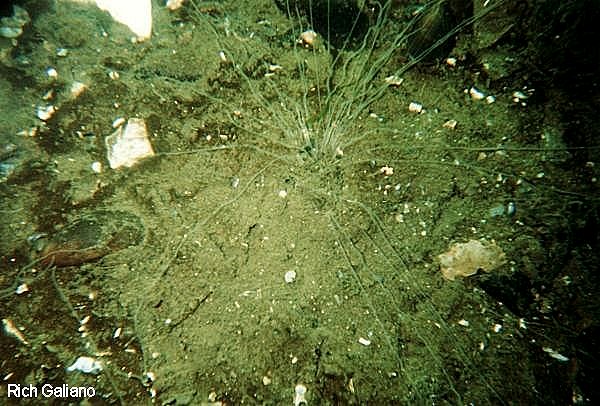
terebellid worm
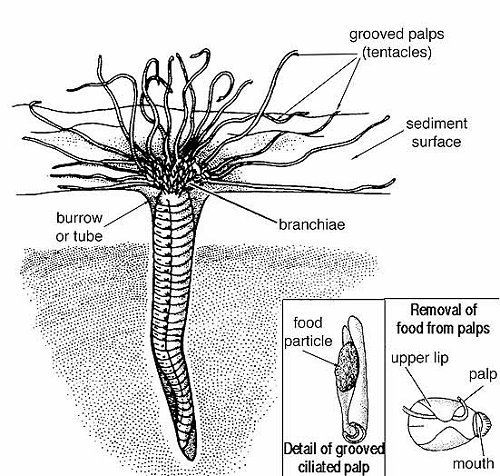
The head of a terebellid worm on a subtidal mudflat in the Shark River. These are tube worms with long tentacles that spread out over the bottom. Cilia on the tentacles carry microscopic bits of food to the mouth ( see below. ) These worms do not sting like anemones.
terebellid worm anatomy
Tubeworm anatomy
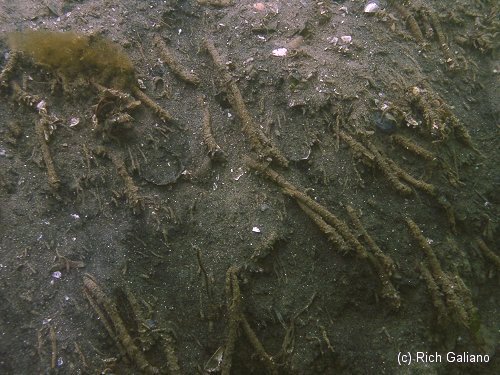
Tube worm burrows
Tube worm burrows in the side of a freshly dug hole. The dark color of the sediment indicates anoxic ( no oxygen ) conditions, which is normal in this sort of muddy bottom.

Mussels
Mussels are sparse on the Stolt Dagali.
Mussels

Mussels are easy. they grow almost everywhere - on any hard surface. They are the lawn grass of the sea. All you have to do is pluck them and put them in your bag. Don't waste a lot of time selecting them individually underwater. Just grab big clumps as fast as you can, and stuff them in your bag. Sort them out topside later, when your nitrogen clock isn't running. Take more than you think you'll want because you will end up discarding a lot of what you take this way.