Bryozoans
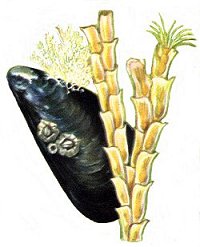
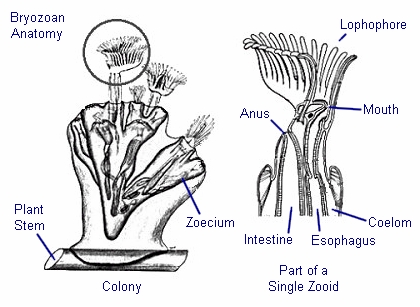
Bryozoans are colonial animals of uncertain evolutionary descent. They may be related to freshwater rotifers. Bryozoans are found in the lower intertidal to subtidal zones, attached to a firm substrate, and also in brackish water. Individual animals are too small to see with the naked eye.
Bryozoan growth forms range from encrusting, forming coatings on hard surfaces, to bushy. An entire colony may bear a superficial resemblance to a hydroid colony, although bryozoans are internally more advanced than cnidarians. Bryozoan colonies grow to 3", and are occasionally larger.
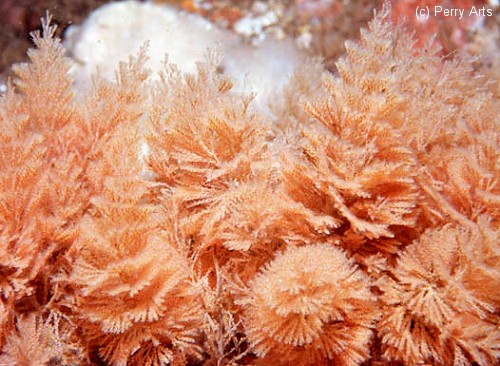
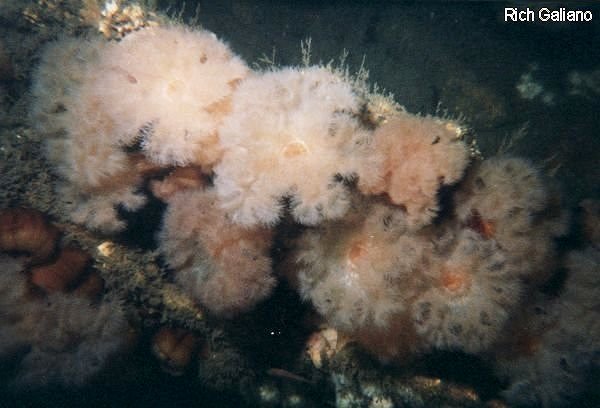
All these are animals that, in a sense, occupy the physical niche of the plants which are missing from the deeper parts of the marine environment. All are filter-feeders, straining plankton from the surrounding waters.
More: Plant-like Animals ...