
A Neat Idea

I added navigation structures to the end of every page. If you read all the way to the end of a long page ** you'll find all your navigation options waiting for you at the bottom. So you don't have to scroll all the way back to the top, although you always could do that with just one click.

The structure at the bottom is the most complete navigation 'node' of any; it makes use of all the screen space available in the main area. You can use it to pick your way from one page to the next through entire sections of the website, if you are so inclined.

I have about 3/4 of all the pages/subjects loaded into the new website, with the Dive Sites, Artificial Reefs, and Artifacts sections finished. I've slowed down a lot, but I'll get to the end eventually, and then this site will take over from the old one. This is so much easier to maintain than the old static PHP.

** Do people still read? Or just watch videos?
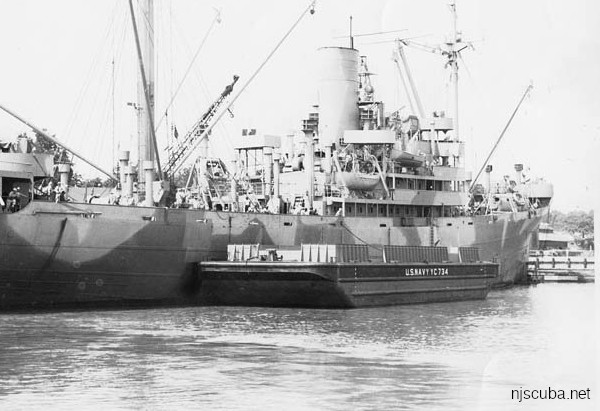

Marine Life Colonization of Experimental
Reef Habitat in Temperate Ocean Waters of New Jersey

By Bill Figley
January 2003

This investigation was partially funded by the Federal Aid to Sportfish Restoration Program

for the original paper, see here.


ABSTRACT

A biological colonization study of experimental reef habitats in temperate ocean waters off New Jersey was conducted over a 96-month period. A total of 145 different taxa of 9 phyla were identified within the experimental units, including 42 arthropoda, 37 annelida and 43 molluska. Individual organisms had an estimated mean abundance of 534,566 organisms/m2 of habitat footprint, including 105 fish, 4,639 crabs and 14 lobsters. Colonial organisms covered 87,554 cm2 of the habitat surface area. Mean total biomass of the organisms inhabiting the units was 84,175 g/m2, with blue mussel comprising 63 percent of the total. The carrying capacity of the experimental habitat for all species of marine life was about 152,801 g/m2. Predation accounted for an 80 percent reduction of biomass between surfaces exposed and not exposed to predators. There were no statistically significant differences in biological colonization rates of sessile epibenthos on concrete, rock, steel and rubber substrates. On an equivalent area basis, the biomass enhancement ratios of the experimental reef habitats over surf clam-dominated and polychaete/crustacean-dominated sand bottom habitats ranged from 35 to 1,124 and 2,773 to 3,200 times, respectively. A simplified, three-tiered reef habitat food chain consisted of 84.5 percent sessile/sedentary invertebrates, 11.0 percent mobile invertebrates and 4.5 percent juvenile and adult fish. The results suggest that complex reef habitats provide both attachment surfaces and refuge habitats that support a diverse and abundant marine life community.