
Northern Stargazer
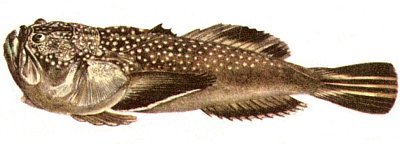
Astroscopus guttatus
Size
to 22" and 20 lbs.
Description:
Don't expect to see these fishes very often - they live buried in the sand, with just their eyes protruding. The eyes are directly atop the flat head, and the mouth is almost vertical. Of course, they are ambush predators. If you flush one from its hiding place, it will clumsily swim a short distance, and then rebury itself in just seconds. Stargazers are capable of producing weak electric currents from organs located behind the eyes. I doubt that it is enough to be dangerous to a diver, although it might be startling! Midshipmen are similar but smaller, with a continuous dorsal fin and luminescent spots instead of electrical organs.
The way I came across one was that I was exploring out away from the wreck, and digging a furrow in the sand with my hand to mark my path*, and ran right into it, flushing it out into the open. Otherwise, it would have let me swim right over. I also saw one in the Shark River once.
* Note: this is a terrible way to navigate, and I am not recommending it. I was very familiar with the site, otherwise, I would have run a reel over the sand.