Tiger Shark

Tiger Shark

Galeocerdo cuvier

Size:
to 24 ft

Habitat:
open ocean, also enters rivers and bays at night

Notes:
extremely dangerous
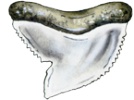
tiger shark teeth

The serrated teeth are designed for sawing chunks from large prey items

If you are going to worry about a shark, let it be this one. Tiger Sharks are big, bold and inquisitive, and frequently come close inshore. They are also remarkably undiscriminating in their eating habits, which makes them even more likely to attack a swimmer, or anything for that matter.

Tiger sharks have the ability to evert ( turn inside-out ) their stomachs, much like starfish. This allows them to 'test' all sorts of food items that would otherwise choke them, like license plates and surfboards.
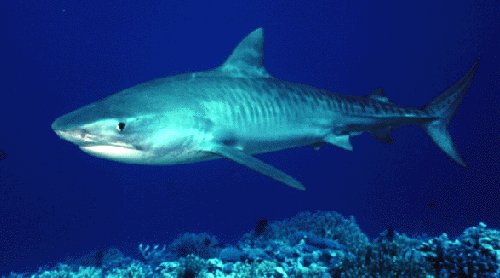
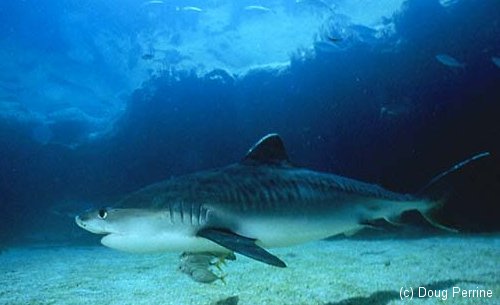
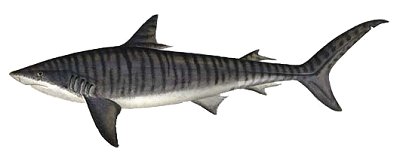
Tiger Shark
The tiger-stripe markings are readily apparent in this shot.
Tiger Shark
Note that this shark and the one above are both swimming over coral reefs, nowhere near New Jersey!
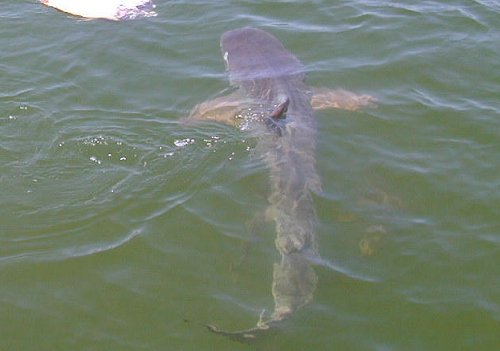
Tiger Shark
A Tiger shark approaches some floating chum. Note the squared-off muzzle. The green water looks like somewhere in Florida.
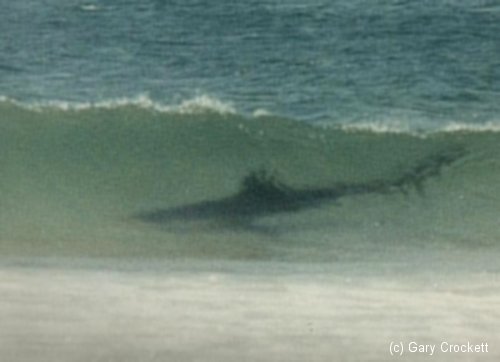
Tiger Shark
A Tiger shark swims in the surf off Australia. Habits like this are what make this shark so dangerous. Fortunately for us, Australia is very far from New Jersey.
Tiger shark displaying its bad habits

rock ridge

This site on the Shark River Artificial Reef consists of two long ridges of seven huge rock piles each, with one long valley east-west between them. Between piles, there are smaller valleys. Each ridge contains approximately two million tons ( or one million cubic yards ) of granite, blasted and dredged from the bottom of New York harbor between September 2002 and September 2003. Peak depths range from 85 to 105 ft, bottom depth is 130 ft. In addition, 15 Redbird subway cars were deposited on or near one of the piles. A similar rockpile is located in shallower water on the Axel Carlson Reef.