
Sea Mammals
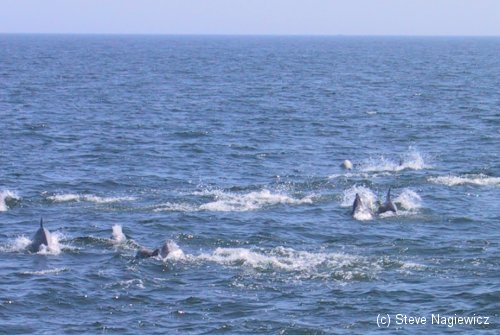
All marine mammals are strictly protected by law, and may not be approached or harassed. Foxes excepted.
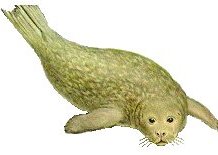
Phoca vitulina
by Larry Sarner
Wild seals conjure up images of northern or even Arctic climates. But few people know that more than a hundred harbor seals call New Jersey home during the winter months, coming ashore into isolated estuaries and even upstream into a few rivers.
New Jersey is near the southern limits of the range for harbor seals on the East Coast. However, these seals are frequent visitors offshore in winter and even have been reported as far south as the mouth of the Chesapeake Bay in Virginia and off the coast of North Carolina. The winter seal-sighting season runs from December through March. Seals generally leave the New Jersey coast by the second week in April, probably responding to rising air and water temperatures and the increase in human activity.
More: Harbor Seal ...
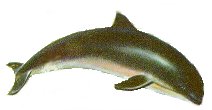
Phocoena phocoena
Size: to 6 ft
Habitat: oceanic
Notes: The smallest cetacean in our waters.
More: Harbor Porpoise ...
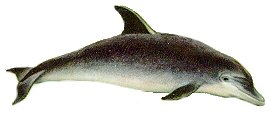
Tursiops truncatus
Size: to 12 ft
Habitat: oceanic
Notes: The largest dolphin in our waters. These occasionally stray into rivers and bays. There they are sometimes trapped in the winter, where they would die if not for the ensuing human rescue operations.
More: Bottlenose Dolphin ...
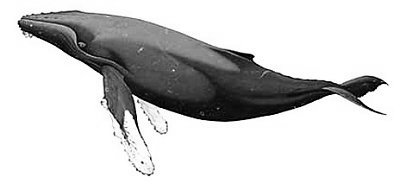
Megaptera novaeangliae
Size: to 50 ft
Habitat: oceanic
Notes:
These are most often seen from charter boats, and are certainly the most common large whales in the area. Occasionally one may even be spotted from shore. The popular notion of a whale song is actually the vocalization of these whales.
More: Humpback Whale ...
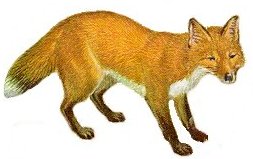
Vulpes fulva
Size: to 25" (about the size of a beagle)
Habitat: wherever there is food
Notes: Alright, this is not exactly a marine mammal. However, these rascals are becoming so common along the Jersey Shore that I thought I would mention them. They are especially common at Sandy Hook and Long Beach Island, where they live on handouts from beach-goers. It is important not to feed them, as this has caused a population explosion, and also makes them bolder with humans, and potentially dangerous. In the off-season, they prey on certain threatened shorebirds as well.
More: Red Fox ...