Worms
There are many types of worms, but most species are either too small or too secretive to be found by casual scuba divers. Nudibranchs are shell-less snails that resemble worms, while Teredos are nearly shell-less bivalves that also resemble worms.
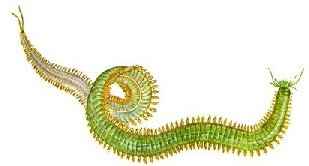
Glycera spp
Nereis spp.(shown)
Size: to 15", generally much smaller
Worms like this can be found anywhere from tidal flats to deep depths, burrowed in the sediment or hiding in crevices.
These segmented worms have four sharp teeth and can give you a good bite if you're not careful. They can also swim, although not very well. The "legs" are called parapodia and are actually gills. The best place to see a blood worm is at the bait shop. Also known as Clam Worms.
More: Blood Worm ...
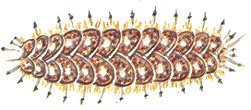
Lepidodontus spp.
Size: to 2"
12-scale worms are usually found while separating and cleaning mussels. They seem to be harmless and inoffensive. In the illustration, the head is at the left. There are many varieties, some with more or less scales.
More: 12-Scaled Worm ...
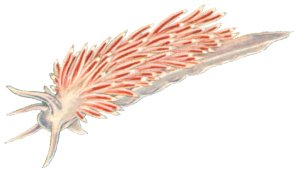
Idulia spp, Coryphella spp, others
Size: 1/2 " to 4"
Nudibranchs or Sea Slugs are not worms but shell-less gastropod mollusks, related to garden slugs. Their closest relatives here are planktonic Sea Butterflies. Some types of nudibranchs, including those shown here, assimilate the functioning stinging cells of their food, and should not be handled for this reason.
More: Nudibranchs ...
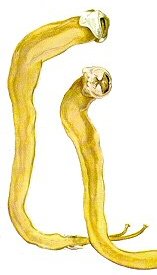
Teredo navalis
Size: to 5 "
This worm-like creature is actually a bivalve mollusk with a greatly reduced shell, which it uses to bore tunnels into wood. They typically spend their entire lives in a tunnel in a single piece of wood. In addition to feeding off the wood, they can also filter feed like ordinary bivalves.
In the age of wooden ships, teredos and other wood-borers were a tremendous problem. In our area, more wood-boring is done by crustaceans than Teredos.
More: Teredo (Shipworm) ...