
Yellow & Brown Algae
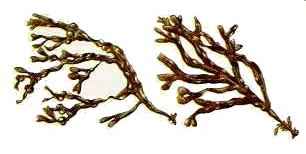
Pictured is a type commonly known as Rockweed ( Fucus vesiculosus, or Bladderwrack ) a tough northern type, adapted to the rocky shores of New England. However, it is more than happy to grow on jetties and pilings wherever it finds them and is quite common in the inlets around New Jersey. Like many other forms of algae, this one has gas bladders for flotation.
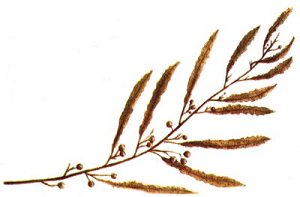
Sargassum or Gulfweed is another brown algae that is brought up in the Gulf Stream in late summer / early fall. East winds blow it in to where it may be found in small to large clumps floating in the surface waters around the offshore wrecks. Scoop up a clump in a goody bag and dump it in a bucket of water. You may find a number of interesting tropical fishes and crustaceans. A native species also occurs as far north as eastern Long Island and southern New England.
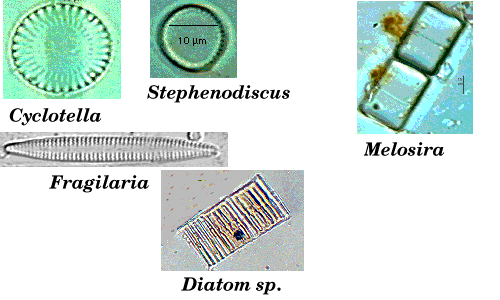
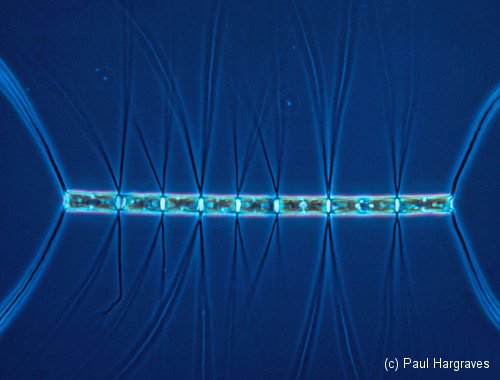
Brown algae also includes microscopic diatoms ( below ), one of the most important types of microscopic plankton, as well as kelp, one of the largest living organisms. Unfortunately, the waters around New Jersey get too warm in the summer for true kelp to survive. Many brown algae are capable of thriving in lower-light conditions than green or red algae.
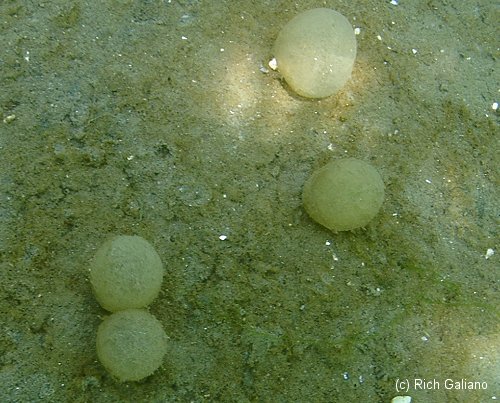
My best guess is that these one-inch balls of goo are a brown algae known as Sea Potatoes. I am told that is a bad guess, and that they are probably something else entirely, not even algae. If anyone knows, please share.
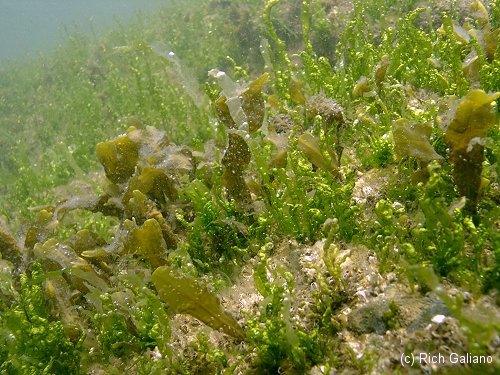
In our waters, plants and algae are found only in shallow water where sufficient light can penetrate for photosynthesis. It would be unusual to find algae below 10-20 ft, so our wrecks and reefs, despite the profusion of attached organisms, are actually devoid of plant life! Of course, that is completely neglecting the microscopic algal plankton that is so profuse in our waters and so lacking in the clear water of the tropics.
More: Algae & Seaweeds ...