Canada Goose
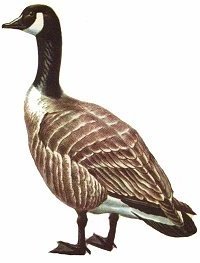
Branta canadensis
Size: 25-43"
Habitat: in and around water
Notes:
The cows of the avian world, geese are one of the only types of bird that eat grass. Their large size is necessary to carry all of the required digestive apparatus. Geese are supposed to migrate through our area, leaving only very small resident populations, but they have taken to our grassy parks and campuses so well that now huge populations live here year-round.
These resident geese are thought to be descendants of captive birds that were used by hunters as live decoys in years past, and either escaped or were set free. These geese couldn't find Canada if they wanted to, and they don't want to. It is doubtful that they even breed with their migratory cousins.
These are not nice birds. They are noisy, they obstruct traffic and cause accidents, and they defecate everywhere on everything, fouling walkways, playgrounds, and water supplies. They will even attack small children and are especially belligerent when guarding their own young. What is needed for these resident geese is a reclassification from protected migratory waterfowl to feral pests, so that they can be disposed of properly.

Canada Geese migrate in huge V-shaped formations like this every Spring and Fall. Or at least, they are supposed to.
Here is an assortment of birds that might be observed in and around the water. Many of these are just as likely to be found around saltwater, just as many seabirds live happily around freshwater, and even no water.
More: Birds ...