Red Fox
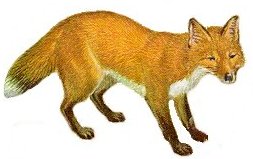
Vulpes fulva
Size: to 25" (about the size of a beagle)
Habitat: wherever there is food
Notes: Alright, this is not exactly a marine mammal. However, these rascals are becoming so common along the Jersey Shore that I thought I would mention them. They are especially common at Sandy Hook and Long Beach Island, where they live on handouts from beach-goers. It is important not to feed them, as this has caused a population explosion, and also makes them bolder with humans, and potentially dangerous. In the off-season, they prey on certain threatened shorebirds as well.
Invaders from the west, coyotes are similar, and easily confused with Gray Foxes, which occur in the area as well. Coyotes are noticeably larger than foxes, and hold their tails down when running, while foxes hold their tails straight out. Acme rocket-powered roller-skates are also a dead giveaway.
Foxes are one of the smelliest animals in North America; they have a musky odor that is as strong as a skunk but distinctly different. Once you know it, you can tell if a fox is in the neighborhood, even if you may never see him.

All marine mammals are strictly protected by law, and may not be approached or harassed. Foxes excepted.
More: Sea Mammals ...